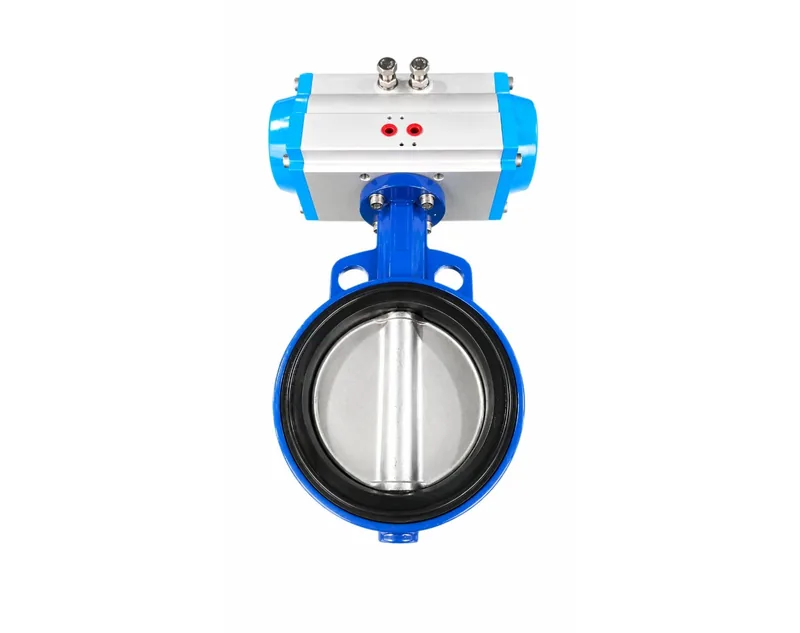
Article Overview: This guide helps procurement managers and project engineers specify a solenoid valve for pneumatic actuator packages before issuing an RFQ. It covers port size, coil count, voltage, Cv, and supplier validation. The advice is based on JIMAI's public documentation and general engineering practice; confirm final ratings with the manufacturer for your specific process conditions.
How Do I Choose the Right Solenoid Valve for a Pneumatic Actuator?
Define the actuator type, fail-safe position, port size, coil voltage, and whether you need one coil or two. Match the valve's NAMUR interface and Cv to the actuator's air consumption, then verify data sheet ratings before RFQ.
A solenoid valve is the electrical control element between the automation system and the pneumatic actuator. It shifts the air supply to pressurize or vent the actuator ports. For quarter-turn actuators, the common configurations are 3/2-way for spring-return actuators, 5/2-way for double-acting actuators, and 5/3-way where an intermediate stop position is needed. Manufacturer accessory guides regularly list these three types as the core pneumatic control options.
Before you send an RFQ, document these inputs:
- Actuator type and fail-safe requirement: spring-return or double-acting.
- Port connection: NAMUR interface and air inlet thread, such as G1/4.
- Electrical control: coil voltage and whether the controller output is continuous or momentary.
- Coil count: one coil for spring-return packages, two coils when the valve must hold its position without continuous power.
- Flow requirement: actuator air volume, required cycle time, and supply pressure.
- Accessory and environmental fit: manual override, ambient temperature, and enclosure protection.
Single-coil and double-coil are not interchangeable in the control wiring. A single-coil valve requires one output and a spring return; a double-coil valve is usually pulse-controlled with two momentary outputs. Confirm which coil arrangement matches the PLC or DCS output card before finalizing the specification.
If you are not certain how port size and torque assumptions interact, start with the pneumatic actuator technical FAQ covering sizing, accessories, and application solutions before writing the RFQ.
What Is the Difference Between Single-Acting and Double-Acting Solenoid Valves?
Single-acting solenoid valves use one coil and a return spring to pressurize or vent one actuator port, suiting spring-return actuators. Double-acting solenoid valves use two coils to switch air between both ports, suiting double-acting actuators.
The distinction matters because a spring-return actuator uses air pressure to compress a spring and vents to return. A single-acting solenoid valve should supply and exhaust one working port. A double-acting actuator needs a valve that switches pressure between two ports; using the wrong valve leaves one port pressurized and the stroke incomplete.
Single-acting solenoid valve
- Typically 3/2-way with one coil and a return spring.
- De-energized state vents the actuator port.
- Matches spring-return pneumatic actuators.
- Fail-safe position depends on the spring and porting.
Double-acting solenoid valve
- Typically 5/2-way with two coils.
- Each coil pulse shifts the valve to the other position.
- Matches double-acting pneumatic actuators.
- Without air pressure, there is no defined fail-safe force.
A common sourcing error is ordering a 5/2 valve for a spring-return actuator because the actuator nameplate says single acting spring return. A 5/2 valve has two working ports; a single-acting actuator needs one. If the second port is not used or capped, the valve may still operate, but the fail-safe response can be unpredictable. Confirm the de-energized state of the valve matches the required fail-safe position: normally open or normally closed.
When you write the RFQ, describe the valve by the actuator function it must provide, not only by a part number. State whether the actuator is single acting or double acting and what position it must take on loss of signal. For a broader view of how a solenoid valve is packaged with limit switches, positioners, and manual overrides, see the comprehensive guide to essential pneumatic actuator accessories and their applications.
How Does Cv Rating Affect Solenoid Valve Selection?
Cv indicates the solenoid valve's flow capacity at a specified pressure drop. Higher Cv supports faster actuator cycle times only when port size, tubing, and air supply can deliver that flow. Choose Cv after estimating actuator volume.
Cv is a flow coefficient that represents the volume of air the valve passes under a defined pressure drop. A higher Cv can move the actuator faster, but only if the rest of the air path, including filter, regulator, tubing, and exhaust, does not become the bottleneck. A valve with a large Cv on a small port will not help if the tubing restricts flow.
To use Cv in the RFQ, estimate the actuator displacement and add the volume of the interconnecting tubing. The required cycle time then defines the minimum flow rate. If the solenoid valve's Cv is too small, the actuator will creep or stall at speed; if it is too large, the exhaust can create shock loads that stress the valve and piping. Published Cv values assume a clean, dry air path at standard conditions, so ask the supplier for a flow curve at the operating pressure range you will actually use.
Port size and mounting interface also affect delivered flow. The pneumatic actuator accessories overview explains how filters, regulators, lubricators, and speed controllers change what the solenoid valve actually sees.
What Voltage Options Are Available for Solenoid Valves in Industrial Automation?
Solenoid valve coils are commonly specified for 24V DC control, and AC coils are available where line-voltage operation is required. Verify the exact coil rating, inrush behavior, and duty cycle against your control system before ordering.
For PLC-controlled machines, 24V DC coils are common because the control cabinet already supplies 24V. AC-powered coils are available for line-voltage circuits, but the coil rating must match the local supply voltage and frequency. A coil rated for one voltage should not be used on another, even if the actuator seems to operate during testing; pickup and holding characteristics differ.
Coil count also affects the control wiring. A single-coil valve needs one controller output to shift and a spring to return. A double-coil valve needs two momentary outputs and does not require a maintained signal; it holds its last position when electrical power is removed. This distinction is usually listed in the datasheet as single solenoid or double solenoid. In addition, confirm whether the coil is rated for continuous duty, especially for high-cycle applications where heat buildup can shorten service life.
Voltage tolerance is not a safety margin. Coils have a nominal rating and a usable voltage range, usually published by the manufacturer. Operating at the edge of that range can reduce magnetic holding force and cause spurious shifting. Ask the supplier what voltage tolerance applies and whether surge suppression is needed when the coil is driven by a PLC output. Switching inductive loads without clamping can stress both the output card and the coil.
What Should You Validate Before Sending the Solenoid Valve RFQ?
Before RFQ, verify actuator type, fail-safe position, port size, voltage, Cv, and accessory interface. Ask the supplier to confirm these values in writing and include a datasheet that matches your operating pressure range.
The RFQ should be written as a performance specification, not a part number alone. Include the operating pressure range, ambient temperature, and control interface so the supplier can flag compatibility issues before quoting. If the process requires high stroke speed, state the actuator air volume and the desired cycle time; this gives the supplier enough information to recommend a solenoid valve with the appropriate flow capacity.
Step 1: Define the pneumatic actuator and valve duty
Record actuator type, spring-return or double-acting, valve torque or volume, rotation direction, and fail-safe position. This determines whether you need a 3/2-, 5/2-, or 5/3-way valve.
Step 2: Confirm interface and port size
Verify that the solenoid valve's mounting interface follows NAMUR and that the air inlet thread, such as G1/4, matches the actuator and tubing. Request a dimensional drawing in the RFQ response.
Step 3: Match electrical and control requirements
State the coil voltage, coil count, and controller output type. Ask if the coil is continuous-rated and what surge suppression is recommended.
Step 4: Validate flow and cycle time
Provide actuator air volume and required stroke time. Ask the supplier to confirm the Cv and flow curve at your supply pressure, not only at standard conditions.
Step 5: Request written confirmation
Ask for a datasheet, NAMUR interface drawing, and enclosure protection rating. Written confirmation prevents substitution during delivery.
FAQ
Can I use a 5/2 solenoid valve with a single-acting actuator?
Generally no. A 5/2 valve has two working ports and is designed to switch air between both ports of a double-acting actuator. A single-acting, spring-return actuator needs one working port with supply and exhaust. Using a 5/2 valve on such an actuator requires capping or converting one port, which can create unpredictable venting and fail-safe behavior. Confirm the circuit with your supplier before ordering.
Why does coil voltage matter more than the terminal label?
Coil voltage determines the minimum pickup voltage, holding current, and heat generation. Applying a coil voltage outside the nameplate range can cause noise, overheating, or failure to shift. A 24V DC coil may appear to work on a 24V PLC output, but if the PLC cannot supply the inrush current, the valve can operate intermittently. Check the datasheet and the control output rating.
Should I size Cv for normal operation or for the worst-case cycle time?
Size for the worst-case cycle time when speed is a process requirement. A higher Cv provides more flow capacity, but supply pressure, port size, tubing length, and exhaust path all affect actual speed. Request a flow curve and cycle-time data at your operating pressure, and compare it with the actuator's required air volume.
Conclusion
Selecting a solenoid valve for a pneumatic actuator starts with clear operating requirements: actuator type, fail-safe position, port connection, voltage, coil count, and flow. Use those inputs to write the RFQ, then validate the supplier's response against datasheets, flow curves, and interface drawings. The evidence in this guide is limited to general engineering practice and JIMAI's published installation and accessory documentation; final ratings must come from the manufacturer for your specific process conditions.