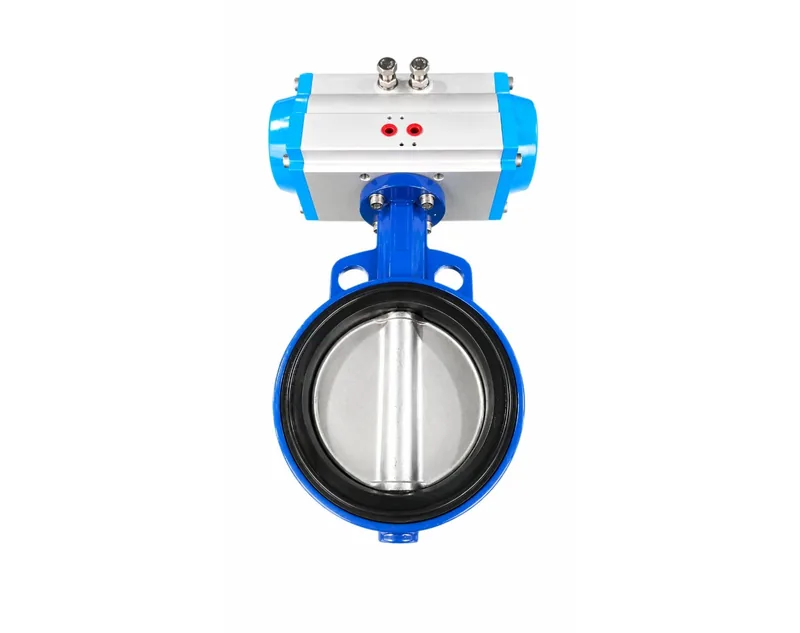
Article Overview: An evaluation of pneumatic actuator mounting standards is really an evaluation of two interfaces: the ISO 5211 valve-side flange and the NAMUR accessory-side pattern. This guide gives CTOs, technical architects, and procurement teams a comparison framework, with the conclusion that neither standard replaces the other and that fit depends on documented valve and accessory data. Evidence is drawn from JIMAI's published installation guidance.

Which pneumatic actuator mounting standards should buyers compare?
The practical comparison set is two complementary interfaces: ISO 5211 for the actuator-to-valve flange and NAMUR for the actuator-to-accessory mounting. Together they determine whether a pneumatic actuator can be installed without custom brackets or adapters, so both must be evaluated in a single decision.
Start with the valve-side interface. The valve-side connection standard is ISO 5211, with international standard dimensions such as F05 and F07 that allow direct implementation with the customer's valve. This means the buyer must supply the valve flange dimension and output torque to the actuator manufacturer before ordering. Without those two data points, the ISO 5211 pattern cannot be matched and the assembly may require custom transition pieces.
Then evaluate the accessory-side interface. Based on the NAMUR standard, the accessory connection is designed to be readily equipped with a solenoid valve and limit switch box. The buyer also needs the air inlet hole dimension, such as G1/4, to select the correct tubing. The comparison is therefore not between one standard and a competing standard; it is between two data sets that must both be complete before an actuator can be procured.
The two standards are physically separate. ISO 5211 dimensions define the lower flange pattern that connects to the valve, while NAMUR dimensions define the top face for solenoid and limit switch mounting. A buyer who evaluates only one side of the actuator may discover the mismatch only during commissioning. Treat the valve-side and accessory-side checks as sequential gates, not optional extras.
For an engineering team that needs the full procedure, the standardized mounting connection guidance explains how the valve-side and accessory-side dimensions are collected.
What trade-offs exist between pneumatic actuator mounting standards?
The key trade-off is between valve-side interchangeability and accessory-side compactness. ISO 5211 gives flange interchangeability only when flange data is supplied; NAMUR enables direct accessory mounting only when the top pattern matches. Neither removes the need for the other.
Actuator manufacturers build one housing that must satisfy both standards simultaneously. The valve side uses an ISO 5211 pattern matched to the valve's stem and flange, while the top side uses a NAMUR pattern so a solenoid valve or limit switch box can be mounted without a separate bracket. The trade-off is therefore not either/or. It is a question of which interface is under-specified in your procurement data.
Before selecting the NAMUR pattern, review which accessories will be mounted: solenoid valves, limit switch boxes, positioners, and manual overrides are common examples, as described in the comprehensive guide to essential pneumatic actuator accessories and their applications.
Key specification comparison
| Criterion | ISO 5211 valve-side | NAMUR accessory-side |
|---|---|---|
| Primary interface | Actuator-to-valve flange | Actuator-to-accessory mounting |
| Common dimensions in evidence | F05, F07 | Varies by actuator and accessory |
| Typical mounted components | Valve stem and flange | Solenoid valve, limit switch box |
| Air connection relevance | Port size such as G1/4 affects tubing selection | Port size such as G1/4 affects tubing selection |
| Decision input needed | Valve flange dimension and output torque | Accessory mounting pattern and port size |
Because the two standards are complementary, the actual procurement trade-off is about documentation. If the valve flange dimension and output torque are not supplied, the actuator model cannot be selected reliably. Similarly, if the accessory's mounting pattern is assumed rather than verified, the limit switch box may not fit the actuator's NAMUR holes.
Which pneumatic actuator mounting standard fits each operating condition?
No standard wins universally. ISO 5211 fits plants that stock valves from different manufacturers and need flange interchangeability. NAMUR suits automated lines that want compact solenoid and limit switch mounting. In quarter-turn actuators both coexist, so the operating condition sets emphasis.
The fit depends more on operating and maintenance environment than on the actuator's brand. Use the following decision cards to map your conditions.
Replacement and retrofit programs
ISO 5211 emphasis: Plants with valves from different manufacturers benefit because international flange dimensions such as F05 and F07 allow direct implementation with the customer's valve.
NAMUR emphasis: Retrofits that reuse existing solenoid valves and limit switches need the accessory-side pattern to stay constant, even when the actuator changes.
Buyer note: In a retrofit, collect the flange dimension and torque of the existing valve first, then confirm the accessory pattern.
Compact control-panel construction
ISO 5211 emphasis: This standard does not govern accessory mounting, so it cannot reduce bracket and piping complexity by itself.
NAMUR emphasis: Direct solenoid valve and limit switch boxing reduces the need for separate mounting brackets and leads to a more compact assembly.
Buyer note: If panel space is tight, prioritize NAMUR-compliant accessories but still verify the actuator's air inlet dimension.
Mixed-vendor maintenance environment
ISO 5211 emphasis: Standard valve-side patterns allow a maintenance crew to interchange actuators from different suppliers without reworking the valve flange.
NAMUR emphasis: Accessory interchangeability depends on the top pattern remaining compatible across vendors.
Buyer note: For mixed-vendor sites, document both standards in the asset register instead of assuming one standard is sufficient.
These decision cards cover typical operating conditions. For a hypothetical retrofit where the valve is fixed and only the actuator is being replaced, ISO 5211 compatibility becomes the dominant constraint because the valve flange cannot be changed without extra cost. In a new skid where panel space is limited, NAMUR affects the compactness of the assembly, but the valve-side flange still must be specified.
The interaction between the two standards is particularly visible in quarter-turn rack-and-pinion designs, which are covered in the essential guide to quarter-turn rack-and-pinion pneumatic actuators.
How should mounting compatibility be verified before ordering?
Procurement teams should verify four inputs before ordering: valve flange dimension, actuator output torque, rotation angle, and accessory mounting pattern. These determine whether ISO 5211 and NAMUR interfaces align. When data is incomplete, request the actuator manufacturer's standard connection drawing and confirm air inlet size.
The following flow cards show a practical evaluation sequence.
Step 1: Record valve-side data
Capture the valve flange dimension, stem size, and required torque. Outcome: This provides the input needed to match an ISO 5211 pattern.
Step 2: Confirm the accessory list
Decide which solenoid valve, limit switch box, positioner, or manual override will be mounted. Outcome: This defines the NAMUR top-pattern requirement.
Step 3: Check port and air supply
Verify the air inlet hole dimension such as G1/4 and the air source pressure range, typically 4-7 bar. Outcome: This avoids tubing and fitting mismatches.
Step 4: Validate against the specification sheet
Compare the collected data with the actuator datasheet and request a standard connection drawing before committing. Outcome: This reduces return, rework, and installation delays.
In practice, the verification sequence should be repeated whenever the valve model changes. A different valve flange dimension can force a different actuator frame size and, in turn, a different top pattern, so a standard that was compatible on the previous valve may no longer be compatible on the replacement.
These steps can be executed by a maintenance engineer or a procurement specialist, but the responsibility should be assigned clearly. Without a single owner, the flange dimension may be collected from the valve datasheet and the output torque from a different source, and the two may not be reconciled. A practical mitigation is to request the actuator manufacturer's standard connection drawing early in the RFQ process. The drawing makes it easy to verify both ISO 5211 and NAMUR interfaces before the actuator is committed to the project.
FAQ
Do ISO 5211 and NAMUR replace each other?
No. ISO 5211 standardizes the valve-side flange, while NAMUR standardizes the accessory-side connection. In a complete actuator assembly, both standards are relevant, so selecting one does not eliminate the other.
Why does the valve flange dimension matter more than the actuator brand?
Because ISO 5211 dimensions such as F05 and F07 allow direct mounting with the customer's valve. If the flange dimension or output torque is missing, the actuator model cannot be selected reliably, leading to connection or performance problems.
What should be checked if a limit switch box does not fit?
Verify the actuator's accessory mounting pattern against the NAMUR interface and confirm the hole spacing of the limit switch box. Also check the air inlet size such as G1/4, since tubing and fittings must match the actuator port.
Conclusion: A Buyer Framework for Mounting Standards
ISO 5211 and NAMUR are complementary pneumatic actuator mounting standards rather than competing alternatives. ISO 5211 governs the valve-side flange and requires flange dimension and output torque data; NAMUR governs the accessory side and requires the mounting pattern of the solenoid valve or limit switch box. Buyers comparing options should evaluate both interfaces, verify the air inlet size, and document valve and accessory data before ordering. The right procurement decision is the one that matches the complete mounting interface to the operating and maintenance environment.