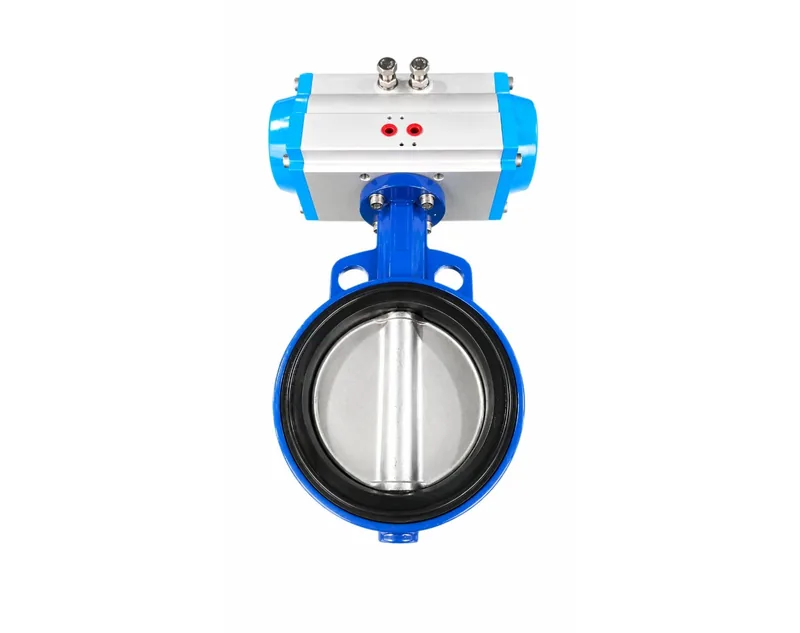
Article Overview: Pneumatic actuated ball valves combine a quarter-turn ball valve with a compressed-air actuator for automated flow control. This article is intended for plant engineers, automation specifiers, and technical buyers comparing industrial valve packages. It answers where pneumatic actuated ball valve applications perform well, what remote on/off service requires, and when pneumatic actuation offers useful advantages over electric actuation. The conclusion is that the natural fit for these valves is a process that already has compressed air, needs fast quarter-turn on/off service, and may specify spring-return failure behavior. The evidence boundary is the supplier's published technical guidance; no market-size or independent performance data has been added. For the page-specific reference, see What Are the Common Accessories Used with Pneumatic Actuators? - JIMAI.
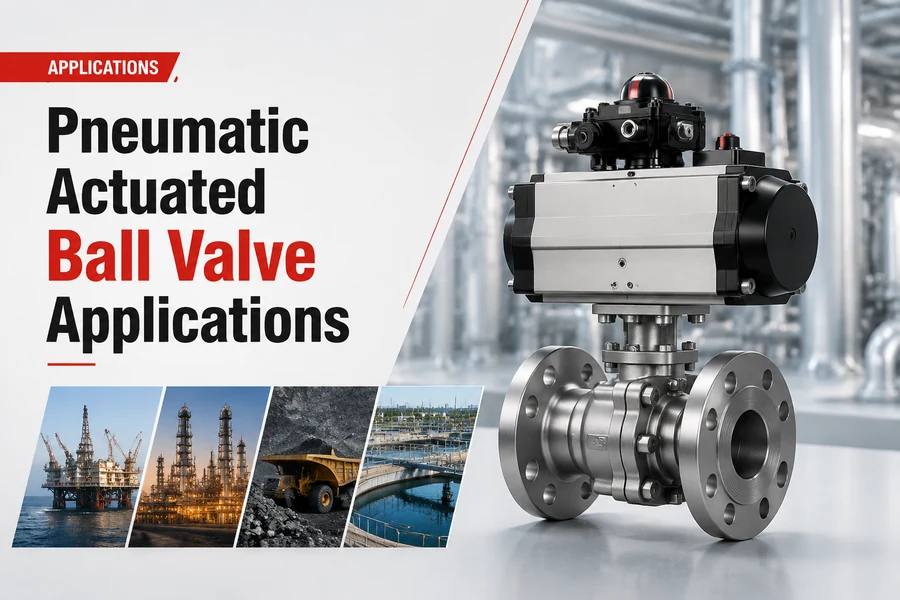
Which Industries Use Pneumatic Actuated Ball Valves?
Industry guidance commonly places pneumatic actuated ball valves in oil and gas, petrochemical, coal mining, and water treatment installations, where repeated quarter-turn shutoff can be needed in demanding conditions.
A pneumatic actuated ball valve converts compressed-air energy into rotary motion and turns a ball through roughly 90 degrees between open and closed. This makes it a quarter-turn valve rather than a linear throttling device. Actuator selection usually starts with one of two families. A double-acting actuator uses air pressure for both opening and closing. A single-acting, or spring-return, actuator uses air pressure for one direction and a spring for the other.
The supplier guide to optimizing valve control systems with pneumatic actuators cites oil and gas and the water treatment industry as broad application areas for pneumatic actuation. Separate ordering guidance for single-acting actuators adds coal mining and petrochemicals and emphasizes combustible or explosive settings. These industries share operating requirements rather than a single product category: the process needs dependable shutoff, often at remote or frequently cycled points in the plant.
Spring-return is the reason the list includes hazardous areas. When system air is lost, the spring drives the ball to a configured safe position, normally open or normally closed. Double-acting actuators do not offer that behavior by themselves because both motions depend on supply air.
Do Pneumatic Actuated Ball Valves Suit Remote On/Off Control?
Remote on/off control is a package matter. With a solenoid as the pilot and limit-switch feedback at the valve, a pneumatic actuated ball valve responds reliably to signals from a panel, PLC, or DCS.
A bare pneumatic actuator moves when air is admitted and vents, but it needs a pilot element to select the movement. A solenoid valve accepts an electric command, typically 24 V in the cited installation example, and routes compressed air to the correct actuator port. The accessory guidance lists 3/2-way, 5/2-way, and 5/3-way valves as common pilot families. At the other end of the loop, a limit switch box detects the open and closed positions with magnetic or proximity sensors and reports the status to the controller.
Step 1: Prepare the air supply
Install a filter and pressure-reducing valve, normally set in the 0.4-0.6 MPa range shown in the source installation example. Clean piping before startup so welding slag, rust, and moisture do not reach the actuator or the sealing surface.
Step 2: Confirm the pilot and rotation direction
Match the solenoid valve and actuator air ports, commonly dimensioned to the NAMUR pattern. Operate the solenoid manually and verify that the ball moves according to the actuator open/close marking.
Step 3: Add feedback and an optional manual override
Mount a limit switch box for discrete open/closed feedback. Where the control room needs a continuous signal, add a position transmitter that converts actuator position to 4-20 mA or 0-10 V for PLC/DCS use. Keep a manual override if operators must move the valve after power or air loss.
The common accessories used with pneumatic actuators define the practical boundary of remote automation. They include filter-regulator-lubricator units, solenoid valves, limit switch boxes, position transmitters, and manual overrides, and each device adds a commissioning point.
Commissioning checks should also follow a documented installation procedure. The correct pneumatic ball valve installation method verifies actuator model, torque rating, mounting alignment, flow direction, and supply pressure before the control signal is trusted.
When Is a Pneumatic Ball Valve Better Than an Electric Ball Valve?
Choose pneumatic when the plant already has compressed air, the control requirement is quarter-turn on/off, and high cycling speed or spring-return fail-safe matters more than precise analog positioning.
The useful comparison for this decision is speed, control simplicity, and failure behavior rather than a full lifecycle-cost model. Use the comparison below as a package-selection starting point.
Pneumatic actuated ball valve
- Works from compressed air, so it is practical when an air supply is available or planned.
- Air pressure at the actuator ports gives quick response for repeated quarter-turn shutoff operations.
- Single-acting spring return gives a defined safe position when air is lost without requiring a separate controller action.
- Discrete on/off control can be kept simple with a solenoid pilot and limit-switch feedback.
Electric ball valve
- Works from an electric motor and electrical control wiring; no compressed-air utility is needed at the point of use.
- Can be the better fit when the surrounding valve population is already electric and no air system is justified.
- Speed, torque, and fail-safe behavior must be compared with project-specific data; the referenced pneumatic guidance does not provide electric actuator specifications.
The strongest pneumatic case is a process duty that already has air utilities and needs repeated quarter-turn on/off operation with a known position on air loss. If no compressed-air network exists and none is planned, an electric package should be evaluated instead. If the process calls for adjustable intermediate positioning, a standard pneumatic on/off package is not the right answer; continuous modulation would require additional positioning hardware and feedback.
Typical Pneumatic Actuated Ball Valve Scenarios
The following matrix condenses application examples found in the referenced supplier material. It is a scenario-selection aid, not a performance warranty for any individual installation.
| Setting | Operating requirement | Actuator response | Package implication |
|---|---|---|---|
| Oil & gas and water treatment | Automated quarter-turn shutoff in process plants cited by pneumatic actuator guidance. | Fast, repeatable operation in demanding environments. | Start with a rotary double-acting actuator unless the process requires spring-return fail-safe. |
| Petrochemical and coal mining | Combustible or explosive settings where loss of air must not leave the valve uncontrolled. | Defined open or closed position after air-supply failure. | Use a single-acting spring-return actuator and state the safe position on the order. |
| High-cycle or contaminant-heavy plants | Frequent operation with moisture, dirt, or process contaminants present. | Durable pneumatic construction with protected internal parts. | Fit an FRL unit and clean the pipework before first operation. |
The matrix also helps avoid specification mistakes. A safe failure position comes from the actuator family, not from the ball valve itself. Remote status comes from limit switches or a transmitter, not from pneumatic energy alone. If those behaviors matter, write them into the package specification and include them in commissioning checks.
FAQ
What is the difference between single-acting and double-acting pneumatic actuators?
Single-acting, also called spring-return, uses air to move the valve in one direction and spring force to return it when pressure is released, giving a defined safe position. Double-acting uses air pressure for both directions and can provide higher output torque, but it does not return to a safe position on air loss unless another mechanism is added.
Is a filter-regulator always required for a pneumatic actuated ball valve?
Supply air for valve actuation should be clean and regulated. The referenced installation guidance tells installers to fit a filter and pressure-reducing valve adjusted to about 0.4-0.6 MPa before the solenoid valve. A lubricator is optional in certain applications and should be specified only when the actuator design requires it.
Can a pneumatic actuated ball valve stop at an intermediate position?
A standard on/off pneumatic package drives the ball to full open or full closed. Some three-position rotary pneumatic actuators can hold a discrete middle angle, such as 45 degrees, before moving to 90 degrees. That is different from continuously adjustable modulating control and needs a purpose-built actuator rather than a standard two-position unit.
Conclusion
Pneumatic actuated ball valve applications are practical in production when compressed air is available, the duty is quarter-turn and on/off, switching frequency is meaningful, and air-loss behavior must move the valve to a safe state. The referenced guidance illustrates these conditions in oil and gas, water treatment, petrochemical, and coal mining settings. Procurement should verify torque, supply pressure, solenoid control, feedback, and fail-safe position during package specification rather than assume them from the industry name alone.