Article Overview: This article provides a neutral, criteria-based comparison of Valve Gearbox limit switch box options, focusing on the APL-210N Limit Switch Box. It is written for technical buyers, CTOs, and procurement teams evaluating solutions for valve automation. We examine design features, application fit, technical trade-offs, and decision factors to help you choose the right limit switch box for your operating conditions.
What Makes the APL-210N Limit Switch Box a Standard Choice?
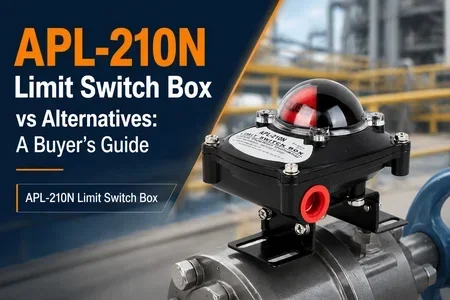
The APL-210N Limit Switch Box is a widely adopted solution for visual position indication and remote signaling of valve status. Its design includes a visual position indicator, a quick-set cam mechanism, a terminal strip for electrical connections, and an easy-to-mount bracket. These components simplify installation and adjustment in typical industrial environments. The product is often used as a baseline option for many valve automation setups where standard environmental conditions prevail.
From a buyer’s perspective, the APL-210N’s value proposition lies in its simplicity and reliability. The quick-set cam allows operators to adjust the switching points without specialized tools, reducing setup time. The terminal strip facilitates straightforward wiring, and the bracket design ensures compatibility with most quarter-turn actuators. However, the standard enclosure may not be suitable for hazardous or corrosive atmospheres. Understanding these inherent constraints is the first step in evaluating your fit.
- Visual indicator: Provides immediate open/close status at a glance.
- Quick-set cam: Enables tool‑free adjustment of cam positions.
- Terminal strip: Simplifies electrical connections and maintenance.
- Easy-mount bracket: Designed for compatibility with common actuator interfaces.
How Does the APL-210N Compare to Explosion-Proof Limit Switch Boxes?
When the operating environment includes flammable gases or dust, an explosion-proof limit switch box such as the ITS-300 is required. The ITS-300 carries an Exd IICT6 explosion-proof rating, uses SS304 screws for corrosion resistance, and is built to contain any internal ignition. The APL-210N, by contrast, is intended for general-purpose use and does not have an explosion-proof certification. The choice between these two options rests on the presence of hazardous zones in your facility.
Use Case: General Industrial vs. Hazardous Location
Option A – APL-210N Limit Switch Box: Suitable for clean, non-hazardous environments such as water treatment, HVAC, and light process control. Lower upfront cost and simpler design. No explosion-proof certification. Ideal for indoor installations with standard electrical classifications.
Option B – ITS-300 Explosion-proof Limit Switch Box: Required for Zone 1/2 (gas) or Zone 21/22 (dust) hazardous areas. Higher cost, heavier construction, and more stringent installation requirements. Offers robust sealing and corrosion-resistant materials. Mandatory where regulatory compliance (e.g., ATEX, IECEx) is enforced.
Buyer note: Verify your area classification before selecting. If future reclassification is possible, consider the ITS-300 to avoid retrofit costs. The APL-210N is not a substitute in hazardous zones.
Specification Comparison: APL-210N vs. Explosion-Proof Alternatives
| Parameter | APL-210N Limit Switch Box | Explosion-Proof (e.g., ITS-300) |
|---|---|---|
| Enclosure Rating | IP67 | IP67 / Exd IICT6 |
| Certification | General industrial (CE, RoHS) | ATEX, IECEx, UL |
| Switching Contacts | 2× SPDT (standard) | 2× SPDT (configurable) |
| Operating Temperature | -20°C to +80°C | -40°C to +85°C |
| Cam Adjustment | Tool‑less quick-set | Tool‑required (Allen key) |
| Corrosion Resistance | Standard enclosure | SS304 hardware, coated |
| Typical Application | Clean indoor environments | Hazardous zones (gas/dust) |
This side‑by‑side comparison highlights the key specification differences. The APL-210N is cost‑effective for non‑hazardous duty, while explosion‑proof models provide certified safety in demanding conditions. Use the table as a quick reference during procurement.
Key Evaluation Criteria for Limit Switch Box Selection
When comparing limit switch boxes, we recommend evaluating the following six criteria. Each criterion addresses a different aspect of technical fit, operating implications, and buyer-side risk.
- Environmental Protection (IP/Type rating): Ensure the enclosure can withstand ambient moisture, dust, and temperature ranges. The APL-210N typically offers IP67, but confirm with manufacturer datasheet. Explosion-proof boxes carry additional protection against ingress and flame paths.
- Certification and Compliance: Determine whether your facility requires ATEX, IECEx, UL, or other certifications. The APL-210N is often certified for general industrial use; the ITS-300 holds Exd IICT6.
- Switching Capacity and Electrical Ratings: Check voltage, current, and number of contacts. Standard switches (e.g., SPDT, DPDT) are available; confirm compatibility with your control system.
- Adjustability and Maintenance: Quick-set cams are convenient. Compare tool‑less vs. tool‑required adjustment. The APL-210N uses a tool‑less cam design; some alternatives require an Allen key.
- Mechanical Interface: Verify bracket and shaft dimensions match your actuator and Valve Gearbox. The APL-210N’s universal bracket fits most NAMUR and VDI/VDE 3845 interfaces.
- Total Cost of Ownership: Include purchase price, installation labor, expected lifespan, and replacement parts availability. Standard units generally have lower initial cost, while explosion‑proof units have higher upfront but longer life in harsh conditions.
Integration of Limit Switch Boxes with Valve Gearbox Systems
A limit switch box is almost always mounted on top of a Valve Gearbox or directly on the actuator to provide feedback on valve position. The mechanical connection typically uses a shaft extension that rotates with the valve stem. The APL-210N Limit Switch Box includes a visual indicator that aligns with the valve gearbox’s output, allowing operators to confirm valve state even without power. In multi-turn applications, a gearbox can reduce the actuator speed while increasing torque; the limit switch box must be matched to the rotation range (quarter‑turn or multi‑turn).
When integrating, consider the following steps:
Step 1: Match Shaft Dimensions
Measure the valve gearbox output shaft diameter and height. The APL-210N bracket accommodates standard sizes; verify compatibility with your specific gearbox model.
Step 2: Set the Cam Positions
Use the quick-set cams to define the open and close limits. Rotate the valve to the desired open position, then rotate the cam until the switch actuates. Repeat for close. This procedure is the same for quarter-turn and multi-turn gearboxes.
Step 3: Verify Electrical Connections
Wire the terminal strip to your PLC or indication panel. The APL-210N typically supports two independent SPDT switches; ensure the voltage and current ratings are not exceeded.
When to Choose a Standard vs. Specialized Limit Switch Box
The decision between a standard limit switch box like the APL-210N and a specialized version (explosion‑proof, stainless steel, high‑temperature, etc.) depends on three primary factors: environment, regulation, and budget. Below we illustrate typical scenarios.
Scenario: Clean Room or Indoor Process Plant
Option A – APL-210N Limit Switch Box: Adequate IP protection, low cost, easy maintenance. No special certifications needed.
Option B – Specialized box (e.g., stainless steel): Over‑engineered for this environment; unnecessary expense. Stick with standard.
Buyer note: Ensure IP rating matches potential washdown requirements. The APL‑210N’s IP67 is sufficient for most indoor environments.
Scenario: Offshore Platform or Chemical Plant
Option A – APL-210N Limit Switch Box: Not certified for explosive atmospheres; cannot be used in hazardous zones. High risk of non‑compliance.
Option B – ITS-300 Explosion-proof Limit Switch Box: Exd IICT6 certified; corrosion‑resistant screws; robust. Required by code.
Buyer note: Always consult zone classification drawings. The APL‑210N should not be considered for any area with flammable gas or dust present.
FAQ
Can the APL-210N Limit Switch Box be used with any valve gearbox?
The APL-210N is designed for quarter-turn valve applications and mounts to standard NAMUR interfaces. Most valve gearboxes with a 14‑ or 17‑mm shaft and matching bolt pattern are compatible. For multi‑turn gearboxes, verify the shaft rotation angle and available mounting bracket. In some cases, an adapter plate may be required.
What is the maximum ambient temperature for the APL-210N?
Standard operating temperature range is typically -20°C to +80°C. For extreme temperatures, consult the manufacturer or consider a specialized limit switch box with appropriate seals and materials. Do not rely on the APL‑210N outside its rated range.
How do I adjust the cams on the APL-210N?
Loosen the cam lock screw (if present) or use the tool‑less rotating mechanism. Rotate the cam until the switch clicks at the desired valve position. Tighten the lock screw. Always perform adjustment with power disconnected.
Does the APL-210N support double‑acting and spring‑return actuators?
Yes, the limit switch box provides position indication regardless of actuator type. The cams are set based on valve position, not actuator mechanism. Both single‑acting (spring‑return) and double‑acting actuators can be used.
Conclusion: Making an Informed Decision
Selecting the right limit switch box requires a clear understanding of your operating environment, regulatory requirements, and mechanical integration. The APL-210N Limit Switch Box serves as a reliable, cost‑effective solution for general‑purpose industrial valve automation. For hazardous locations, an explosion‑proof alternative like the ITS-300 is mandatory. We recommend using the evaluation criteria provided above to objectively compare options. Always confirm specifications with the manufacturer and test compatibility with your Valve Gearbox and actuator assembly before purchase. A well‑chosen limit switch box contributes to safe, efficient, and maintainable valve control over the entire system lifecycle.
Related site pages: Valve Gearbox, Home.