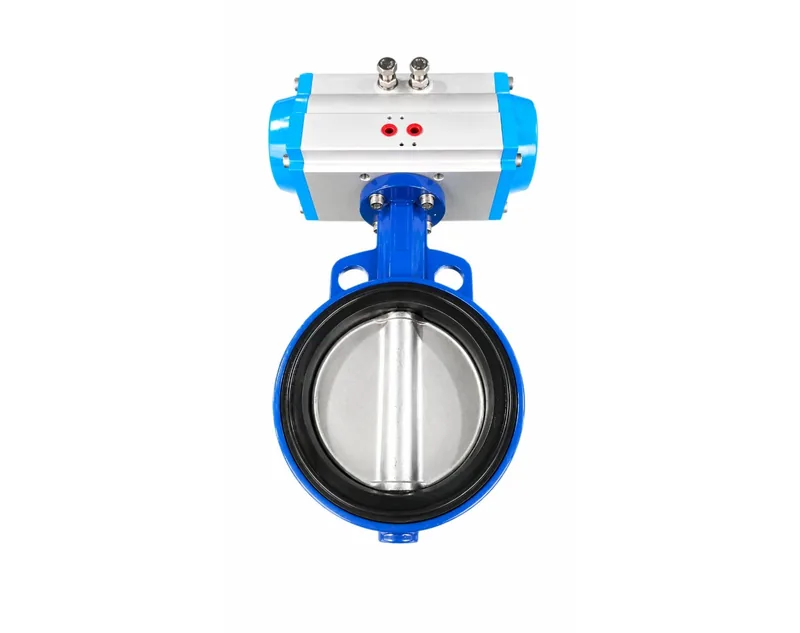
Article Overview: This article provides an objective comparison of pneumatic actuator working principles, focusing on how compressed air is converted into rotary or linear motion. It covers single-acting vs double-acting designs, rack-and-pinion vs scotch yoke mechanisms, key specifications, application fit, and procurement risks. The goal is to equip CTOs, technical architects, and procurement teams with a decision framework for selecting the right pneumatic actuator working principle for their valve automation projects.
How Does the Pneumatic Actuator Working Principle Compare Across Designs?
The core pneumatic actuator working principle involves introducing compressed air into a chamber to drive a piston or diaphragm, which in turn rotates a pinion or moves a linear stem. Two fundamental configurations dominate the market: single-acting (spring return) and double-acting. Your choice affects fail-safe behavior, cost, and maintenance complexity.
Single-Acting (Spring Return) vs Double-Acting
Option A: Single-Acting (Spring Return)
Compressed air moves the actuator in one direction; a spring returns it when air pressure is released. This provides a built-in fail-safe position (e.g., valve closes on loss of air). Suitable for processes where safety mandates automatic shutdown. Requires more torque to overcome spring resistance. Typical applications: emergency shutdown valves, fire-safe systems.
Option B: Double-Acting
Compressed air powers both directions of motion. No spring; higher maximum torque output possible because no spring opposes the air. However, fails to a last position on air loss unless an external locking mechanism is added. Lower initial torque requirement for same size. Common in continuous modulating control and where fail-as-is is acceptable.
Buyer note: Evaluate your plant's safety philosophy. If fail-safe is critical, single-acting is often mandated. For high-torque requirements or limited space, double-acting may be more compact.
Beyond the basic acting type, the internal mechanism that converts linear piston motion to rotary output (rack-and-pinion vs scotch yoke) further influences performance.
What Are the Key Specifications to Evaluate in Pneumatic Actuator Working Principle?
When comparing pneumatic actuator working principle designs, quantify these parameters against your process requirements. The following table compares typical specifications for quarter-turn rack-and-pinion actuators versus scotch yoke actuators.
Key specification comparison
| Criterion | Rack-and-Pinion | Scotch Yoke |
|---|---|---|
| Torque output profile | Nearly constant throughout stroke | Higher torque at ends of stroke, lower mid-stroke |
| Max torque range | Typically 10–4,000 Nm | Typically 100–200,000 Nm |
| Air pressure requirement | 2–8 bar (standard) | 3–10 bar (some high-torque models require higher) |
| Stroke angle precision | ±1° (with limit stops) | ±2° (due to linkage geometry) |
| Cycle speed | Faster (light moving parts) | Slower (heavier components) |
| Typical certifications | ATEX, SIL 3, NEMA 4/4X | ATEX, SIL 2/3, API 6D |
- Torque margin: Always include a 20–30% safety factor above valve breakaway torque when applying the pneumatic actuator working principle.
- Air supply quality: Compressed air must be clean, dry, and lubricated (if required) to avoid seal damage and erratic operation.
- Temperature range: Standard actuators operate between -20°C and +80°C; special seals extend to -50°C or +150°C.
Evaluating Application Fit: Where Does Pneumatic Actuator Working Principle Excel?
The choice of pneumatic actuator working principle should align with the operating environment. Below we compare fit for three common industrial sectors.
Oil & Gas / Petrochemical
Option A: Double-acting with scotch yoke
High torque for large ball/butterfly valves. Fail-last position often acceptable with manual override. Suitable for continuous modulating duty.
Option B: Single-acting with spring return (rack-and-pinion)
Preferred for emergency shutdown valves where fail-safe close is mandatory. Simpler maintenance but lower maximum torque.
Buyer note: Many petrochemical sites mandate SIL-rated actuators. Verify that the chosen pneumatic actuator working principle supports SIL 2 or SIL 3 levels.
Step 1: Define operating zone
Document ambient temperature extremes, humidity, corrosive agents, and explosive atmosphere classification (e.g., Zone 1, Division 2). This determines material requirements (stainless steel, epoxy coating) and necessary certifications (ATEX, IECEx).
Step 2: Determine required torque and stroke
Measure the valve’s breakout torque, running torque, and stroke angle. Apply a safety factor of 1.3–1.5. For spring-return actuators, the spring torque must also be considered at the end of stroke.
Other industries like water treatment and food processing often favor rack-and-pinion actuators due to their compact size and fast cycling. However, for high-cycle applications (above 500,000 cycles/year), consider the wear on seals and the ease of replacement. The pneumatic actuator working principle documentation from JIMAI provides detailed torque charts and material compatibility tables.
How to Choose Between Rack and Pinion vs Scotch Yoke Designs?
The mechanical design within the pneumatic actuator working principle significantly impacts torque profile, size, and cost. Here we compare the two dominant rotary mechanisms.
Rack-and-Pinion vs Scotch Yoke
Option A: Rack-and-Pinion
Linear piston motion translated via a rack that rotates a pinion. Compact, symmetric torque output. Ideal for quarter-turn valves (ball, butterfly) up to ~4,000 Nm. Easy to modify for three-position (e.g., 0°, 45°, 90°) operation. Parts are standardized and widely available.
Option B: Scotch Yoke
Piston rod connected to a yoke/slider that rotates a shaft. Produces higher torque at stroke ends (where breakaway occurs) and lower mid-stroke. Suitable for large valves with high breakaway torque. Generally heavier and more expensive. Preferred for pipeline gate valves and large-diameter butterfly valves.
Buyer note: If you need constant torque throughout the stroke (e.g., for modulating control), rack-and-pinion may be better. If your valve’s breakaway torque dominates, scotch yoke can provide a more efficient pneumatic actuator working principle.
- Compare total cost of ownership: Rack-and-pinion actuators typically have lower initial cost and easier maintenance. Scotch yoke actuators have longer service intervals but higher parts cost.
- Check availability of accessories: Positioners, solenoid valves, limit switches, and manual overrides are more standardized for rack-and-pinion designs. Verify compatibility with the chosen scotch yoke model.
- Evaluate space constraints: Rack-and-pinion actuators are more compact; scotch yoke may require more clearance for the yoke mechanism.
Risk and Cost Considerations in Pneumatic Actuator Selection
Beyond the pneumatic actuator working principle, buyers must assess operational risks and life-cycle costs. The following decision flow helps evaluate key trade-offs.
Phase: Determine fail-safe requirement
If the process demands a specific fail position (open or closed) on loss of air, choose single-acting (spring return) with the appropriate spring torque. If fail-last is acceptable, or if a locking mechanism can be added, double-acting may reduce actuator size and cost.
Phase: Assess maintenance access
In remote or harsh locations, actuators should have easily replaceable seals and modular parts. Rack-and-pinion designs often allow cartridge-style seal kits, while scotch yoke require more involved disassembly. Factor in technician skill level and spare parts lead times.
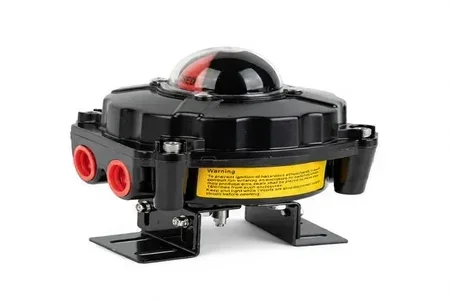
Another cost factor is the control system integration. The pneumatic actuator working principle interacts with solenoid valves, positioners, and air preparation units. For networked control, ensure the actuator’s position feedback (e.g., limit switch box, analog feedback) is compatible with your DCS or PLC. Additionally, review the manufacturer’s production quality certifications with regard to ISO 9001 and testing procedures. Reliable manufacturers provide torque test reports and leak tests for each unit.
FAQ
What is the basic pneumatic actuator working principle?
Compressed air enters a chamber, pushing a piston or diaphragm. The piston’s linear motion is converted to rotary motion via a rack-and-pinion or scotch yoke mechanism, turning the valve stem.
How does single-acting differ from double-acting in terms of the pneumatic actuator working principle?
In single-acting, air moves the piston in one direction and a spring returns it; in double-acting, air moves the piston in both directions, eliminating the spring but requiring air to hold position.
Which pneumatic actuator working principle is best for fail-safe applications?
Single-acting (spring return) provides a predictable fail position on loss of air. The spring torque must be sized correctly to overcome valve friction and seat load.
Can a pneumatic actuator working principle be used for linear valves?
Yes. Linear pneumatic actuators use a diaphragm or piston driving a stem directly. Many valve positioners and accessories are compatible with both rotary and linear actuators.
What maintenance is required for a pneumatic actuator working principle?
Regular checks include seal condition, spring fatigue, air filter replacement, and lubrication of moving parts. Frequency depends on cycle count and environment.
Conclusion
Choosing the right pneumatic actuator working principle involves comparing single-acting vs double-acting, rack-and-pinion vs scotch yoke, and aligning specifications with application demands. Buyers should prioritize torque margin, fail-safe logic, environmental certifications, and total cost of ownership. By systematically evaluating these factors using the comparison framework provided, engineering teams can select a pneumatic actuator that balances performance, safety, and budget. For detailed product specifications and torque charts, refer to the product selection guides available from reputable manufacturers.
Related site pages: pneumatic actuator working principle, Home.