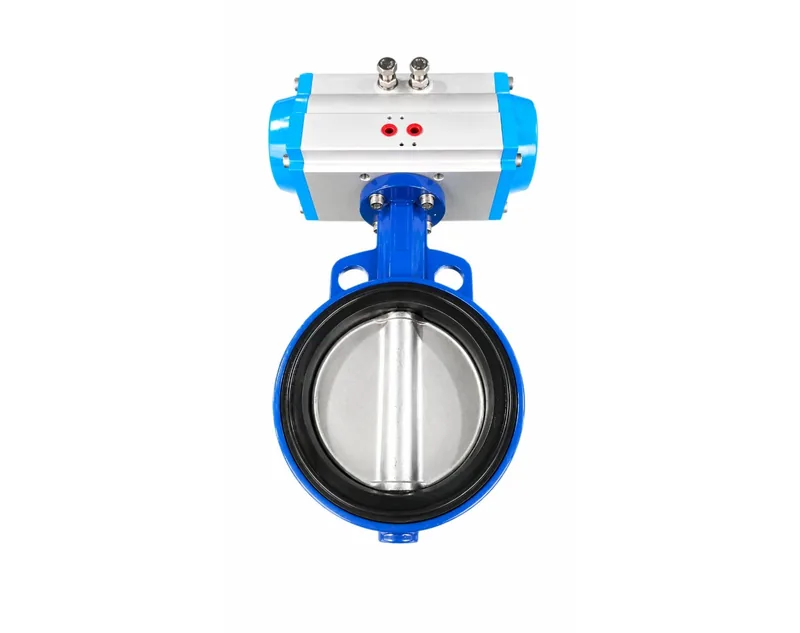
Article Overview: This guide compares pneumatic actuator examples to help engineers and buyers select the right solution for valve automation in oil & gas, chemical, and water applications. We examine key specifications, performance trade-offs, and decision frameworks using neutral examples. Whether you need a double-acting actuator for modulating control or a spring-return unit for emergency shut-off, this comparison provides actionable selection guidance anchored to the core product term: pneumatic actuator example.
What Makes a Pneumatic Actuator Example Critical for Valve Automation?
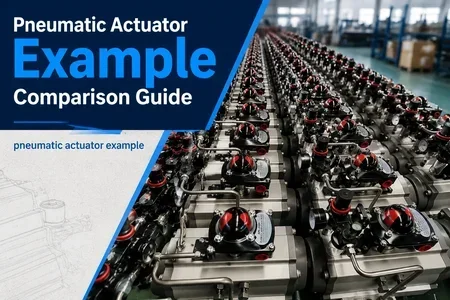
A pneumatic actuator example showcases how compressed air converts into rotational or linear motion to operate valves. In process industries, the choice between different pneumatic actuator examples directly affects safety, uptime, and maintenance costs. Buyers must evaluate torque output, fail-safe behavior, cycle life, and environmental compatibility. The most common pneumatic actuator examples are double-acting (air-to-open/air-to-close) and spring-return (fail-safe position). Each example serves distinct application needs, and understanding their differences is the first step in a successful selection.
Comparing Pneumatic Actuator Example Options: Key Specifications and Trade-offs
When comparing pneumatic actuator examples, start with the torque demand of the valve. A butterfly valve with a 90-degree rotation typically requires lower torque than a gate valve with rising stem. The following table compares typical specifications for two pneumatic actuator examples: a double-acting rack-and-pinion actuator and a spring-return scotch-yoke actuator.
| Specification | Double-Acting Rack-and-Pinion Example | Spring-Return Scotch-Yoke Example |
|---|---|---|
| Torque output | Constant across stroke | High breakaway, lower run torque |
| Fail-safe action | No fail-safe (requires double-acting control) | Fail-close or fail-open via spring force |
| Cycle life (typical) | 1,000,000+ cycles | 500,000–1,000,000 cycles |
| Operating pressure range | 4–8 bar | 4–7 bar |
| Typical applications | Modulating control, non-critical shut-off | Emergency shutdown, fire-safe valves |
Trade-offs include cost: a spring-return pneumatic actuator example is typically more expensive due to additional springs and housing, but it eliminates the need for separate control air in fail-safe scenarios. Double-acting examples offer lower initial cost and higher speed, but require continuous air pressure to maintain position.
- Provides consistent torque throughout rotation
- Faster cycle times due to balanced air pressure
- Lower upfront cost per unit
- Requires redundant air supply for fail-safe
- Built-in fail-safe (spring drives to safe position)
- Higher torque at breakaway (ideal for sticky valves)
- Higher purchase cost and heavier
- Slower cycle due to spring compression
Buyer Note: Choose Option A when process continuity is critical and compressed air is reliable; choose Option B when personnel safety or environmental risk requires automatic valve closure on air loss.
How to Select the Right Pneumatic Actuator Example for Your Application?
Selection begins by defining the valve duty: on/off or modulating? For on/off services like tank isolations, a spring-return pneumatic actuator example is often mandated by safety codes (e.g., API 6D, ISO 5211). For modulating services where the valve position must adjust continuously, a double-acting pneumatic actuator example with a positioner is standard. Evaluate these criteria in order:
- Torque margin: The pneumatic actuator example must deliver at least 1.3 times the valve’s maximum break torque.
- Fail-safe requirement: Determine whether the valve must close, open, or lock on loss of signal or air.
- Environmental conditions: Temperature extremes, corrosive atmospheres, and hazardous areas require appropriate materials (e.g., stainless steel, epoxy coating).
- Speed of operation: Fast-acting actuators for emergency shutdown may need quick exhaust valves.
- Control interface: Analog (4-20 mA) or discrete (solenoid) signals.
For further guidance, see our detailed pneumatic actuator example product page for specification sheets and sizing tools.
Performance Trade-offs in Pneumatic Actuator Example Selection
Balancing performance parameters is essential. A larger pneumatic actuator example provides higher torque but consumes more air, increasing operating costs. Conversely, a smaller actuator may cycle faster but struggle with variable valve torque. The following compare block highlights two real-world scenarios.
- Valve: 2-inch V-ball valve, torque demand 120 Nm
- Pneumatic actuator example: Rack-and-pinion, double-acting, 160 Nm max
- Benefits: Linear response, low air consumption, 2-second full stroke
- Trade-off: No fail-safe; requires check valve on air supply for loss-of-air position hold
- Valve: 8-inch gate valve, torque demand 1,100 Nm
- Pneumatic actuator example: Scotch-yoke, spring-return, 1,500 Nm
- Benefits: Positive fail-close in <4 seconds, meets SIL 2 requirements
- Trade-off: Higher initial cost (approx. 40% premium) and heavier actuator adds structural load
Buyer Note: In Scenario 2, the spring-return pneumatic actuator example is non-negotiable for safety compliance. For Scenario 1, a double-acting example paired with an air reservoir can achieve a similar fail-safe at lower cost.
Additional considerations involve compatibility with valve gearboxes. For quarter-turn valves, a rack-and-pinion pneumatic actuator example integrates directly. For multi-turn valves, a valve gearbox converts linear actuator output. Always check ISO 5211 mounting dimensions.
Frequently Asked Questions
What should buyers evaluate first about pneumatic actuator example?
Start with fit, evidence-backed requirements, and supplier proof relevant to pneumatic actuator example before shortlisting vendors.
How can teams reduce procurement risk for pneumatic actuator example?
Use structured comparison, validate specifications early, and review implementation or quality checkpoints with documented evidence.
Conclusion
Selecting the right pneumatic actuator example requires careful evaluation of torque, fail-safe behavior, speed, environmental resistance, and total cost of ownership. By using specification tables, compare blocks, and decision criteria outlined above, buyers can confidently match a pneumatic actuator example to their valve automation need. Always verify mounting standards and consult manufacturer data sheets. For further details, refer to our pneumatic actuator example solution page for comprehensive technical resources.
Related site pages: pneumatic actuator example, Home.