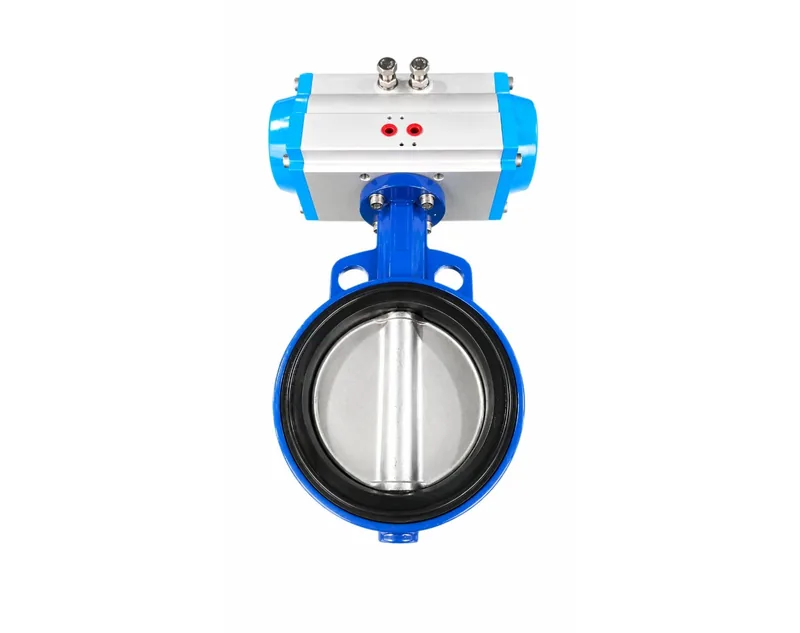
Article Overview: This guide provides procurement managers, sourcing teams, and project engineers with a structured approach to pneumatic actuator ball butterfly valve selection. It covers torque sizing, fail-mode decisions, supplier evaluation criteria, and a procurement checklist to reduce mistakes before issuing an RFQ. The focus is on practical, risk-aware decision-making for quarter-turn valve applications.
Why Is Proper Pneumatic Actuator Ball Butterfly Valve Selection Critical?
Selecting the correct pneumatic actuator for ball and butterfly valves directly impacts process reliability, safety, and total cost of ownership. An undersized actuator may fail to operate the valve under maximum differential pressure, while an oversized unit adds unnecessary cost and can damage valve internals. The consequences of a poor selection include unplanned downtime, safety incidents, and accelerated wear of both actuator and valve. For procurement teams, understanding the key parameters early in the sourcing process prevents costly rework and ensures the automation solution meets plant requirements from day one.
Key Factors in Pneumatic Actuator Ball Butterfly Valve Selection
When evaluating a pneumatic actuator for ball valve or butterfly valve applications, buyers must verify several critical specifications. Below are the primary decision factors to include in your RFQ.
Step 1: Determine the Required Break Torque
Start by obtaining the valve torque profile from the manufacturer. For ball valves, break torque is typically highest at the fully closed position due to seat compression. Butterfly valves have peak torque at the point of disc opening (around 10–15 degrees). Add a safety factor of 20–30% to account for variations in supply pressure, valve wear, and process conditions.
Step 2: Match Actuator Torque to Valve Torque at Supply Pressure
Actuator torque output varies with supply air pressure (typically 4–8 bar). Confirm that the actuator’s torque curve meets or exceeds the valve torque plus safety factor at the available supply pressure. For double-acting actuators, torque is generated in both directions. For spring-return (single-acting) actuators, ensure the spring-end torque is sufficient to move the valve to the fail-safe position.
Mounting Interface and ISO 5211 Compliance
Standardized mounting dimensions according to ISO 5211 ensure proper alignment and eliminate the need for custom brackets. Verify that the actuator and valve have matching flange patterns and drive dimensions. NAMUR mounting for accessories such as solenoid valves and limit switches simplifies integration and reduces leakage paths.
Fail Mode and Safety Requirements
Define the required fail-safe position: fail-open, fail-close, or stay-put. Spring-return actuators are common for fail-closed applications, but double-acting actuators with a backup system may be used in some safety-critical loops. For ATEX zones and SIL-rated loops, request documentation showing compliance and test verification. Avoid relying on generic certification claims without supporting evidence.
- Torque: Break torque + safety factor; supply pressure correction
- Mounting: ISO 5211, NAMUR accessory interface
- Fail mode: Spring-return vs double-acting; define fail position
- Media: Corrosive or high-temperature environments affect actuator material selection
- Cycle life: Expected number of cycles per year; seal material suitability
How to Evaluate Suppliers for Your Pneumatic Actuator for Ball Valve?
Supplier evaluation is a structured process that goes beyond comparing price lists. Use these criteria to assess potential partners for your pneumatic actuator ball butterfly valve selection project.
- Review the supplier’s torque calculation methodology and whether they can validate it with test data.
- Check for ISO certification (e.g., ISO 9001) and specific product standards (ISO 5211, ATEX, SIL). Ask for certificates applicable to your region.
- Inquire about lead times, minimum order quantities, and warranty terms. For large projects, ensure the supplier can commit to delivery schedules.
- Request references from similar applications (e.g., water treatment, oil and gas, chemical processing). Verify that the actuators perform reliably under your process conditions.
- Assess after-sales support: availability of spare parts, local service engineers, and technical documentation.
For a detailed look at actuator construction and design variants, visit the pneumatic actuator product page to understand how different rack-and-pinion and scotch-yoke models align with your torque and mounting requirements.
Procurement Checklist Before RFQ for Pneumatic Actuator Ball Butterfly Valve Selection
Use this checklist to compile all necessary data before sending an RFQ. Missing information often leads to incorrect quotes and project delays.
Step 1: Collect Valve Specifications
Obtain valve type (ball or butterfly), size, pressure rating, torque values at break and running, stem diameter, and mounting flange dimensions. Include process conditions: media, temperature, and differential pressure across the valve.
Step 2: Define Actuator Requirements
Specify required failure mode, supply air pressure range, operating ambient temperature, and control signal type (on/off or modulating). For modulating applications, confirm the actuator’s positioning accuracy and repeatability.
Step 3: Identify Accessories and Certifications
List needed accessories: solenoid valves, limit switch boxes, positioners, and filter regulators. Specify required certifications such as ATEX for explosive atmospheres or SIL 2/3 for safety instrumented functions.
After completing the checklist, you can confidently send a detailed RFQ. For a broad range of pneumatic actuators suitable for ball and butterfly valves, explore the product catalog to match your specifications.
Common Mistakes in Pneumatic Actuator Ball Butterfly Valve Selection
- Ignoring dynamic torque effects: Torque required can increase with valve wear, especially in abrasive media. Plan for a higher safety factor in such applications.
- Overlooking supply pressure variability: If plant air pressure drops, actuator output drops proportionally. Size the actuator for worst-case available pressure.
- Assuming all spring-return actuators are identical: Spring torque decays over time; require the supplier to provide spring torque curves and endurance testing data.
- Skipping mounting compatibility check: Even ISO 5211 flanges have multiple bolt patterns. Always confirm dimensions before ordering.
- Neglecting environmental conditions: High humidity, salt spray, or corrosive gases demand sealed housings or special coatings.
FAQ
What is the difference between a pneumatic actuator for ball valve and one for butterfly valve?
The actuator itself is often the same quarter-turn unit, but the torque requirements differ. Ball valves typically need higher break torque due to seat compression, while butterfly valves have a torque peak at the opening angle. The actuator selection must match the specific valve’s torque profile.
How do I determine the required actuator torque for a butterfly valve?
Obtain the valve’s torque curve from the manufacturer at your operating pressure and temperature. Multiply the break torque by a safety factor (typically 1.25 to 1.3). Ensure the actuator torque at your supply pressure meets or exceeds that value.
Can I use the same pneumatic actuator for both ball and butterfly valves in the same line?
Only if both valves have similar torque requirements and mounting dimensions. It is safer to size each actuator independently because valve torques vary with size, pressure class, and manufacturer.
What certifications should I request for a pneumatic actuator ball butterfly valve selection in an oil and gas plant?
Request ATEX certificate for the actuator and accessories if used in explosive zones, and SIL documentation if the valve assembly is part of a safety loop. Also ask for material certificates and ISO 5211 compliance documentation.
What are the advantages of a scotch-yoke vs rack-and-pinion pneumatic actuator for ball valves?
Scotch-yoke actuators produce higher torque at the ends of the stroke (open and closed positions), which matches the torque profile of ball valves. Rack-and-pinion actuators offer a more linear torque characteristic and are often more compact for smaller valves. The choice depends on valve size and torque requirements.
Conclusion
Effective pneumatic actuator ball butterfly valve selection requires a systematic approach: calculate torque accurately, verify mounting standards, define fail-mode requirements, and evaluate suppliers against objective criteria. By using the procurement checklist and avoiding common pitfalls, B2B buyers can reduce operational risk and secure reliable automation solutions. For further assistance in selecting the right pneumatic actuator for your ball or butterfly valve, consult the pneumatic actuator selection resources or contact the technical team with your valve specifications.