Article Overview: This guide helps procurement managers and project engineers evaluate and select pneumatic actuator valve combinations for industrial automation. It covers torque matching, mounting standards, supplier quality checks, and RFQ best practices to reduce misapplication and supply chain risk.
Understanding Pneumatic Actuator Valve Fundamentals
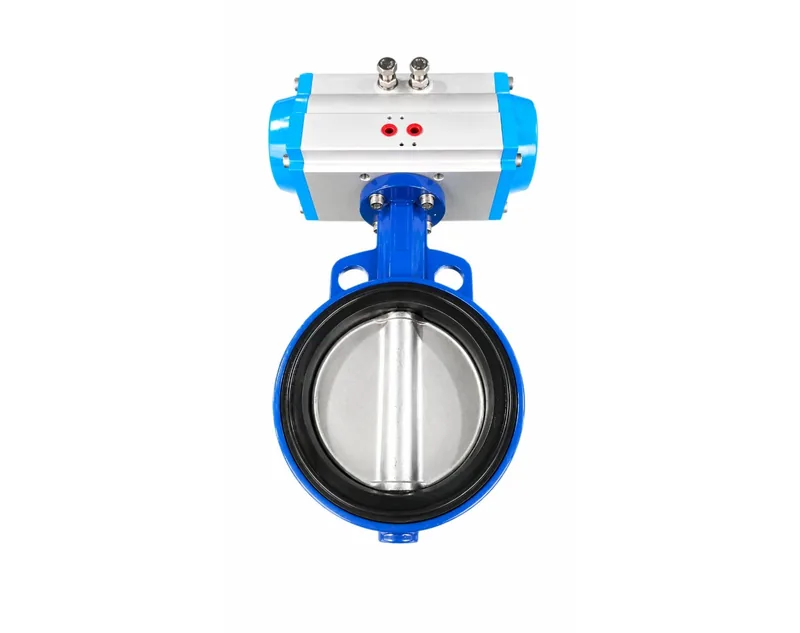
A pneumatic actuator valve converts compressed air energy into mechanical motion to operate a valve. The actuator and valve must be paired correctly to ensure reliable performance, safety, and longevity. Key parameters include actuator type (rack-and-pinion, scotch-yoke, linear), valve type (ball, butterfly, plug, gate), torque output, stroke angle, and failure mode (spring-return or double-acting).
Before issuing an RFQ, buyers should confirm the operating conditions: supply air pressure (typically 4–8 bar), ambient temperature, media type, and cycle frequency. A mismatch in torque or mounting dimensions can lead to premature wear, leakage, or hazardous failure. For a detailed overview of actuator families and construction, refer to the pneumatic actuator product hub.
How to Match Actuator Torque to Your Valve?
Torque is the most critical selection factor. The actuator must deliver sufficient output torque to overcome valve breakaway, running, and reseating forces under all operating conditions. Valve torque varies with pressure differential, media viscosity, and seat material.
- Breakaway torque: the force needed to start valve movement from fully closed or open position.
- Running torque: the force to move the valve through its travel.
- Reseating torque: the force to return the valve to its seated position (especially for ball and butterfly valves).
Buyers should request torque data from valve manufacturers and compare it to the actuator's output torque at the available air supply. A safety factor of 1.5 to 2.0 is common for process applications. Always validate that the actuator's torque curve covers the valve's worst-case condition.
Step 1: Gather Valve Torque Specifications
Request a torque chart from the valve supplier, including breakaway, running, and reseating values at design pressure and temperature. Ensure data covers both dry and lubricated conditions.
Step 2: Map Actuator Output at Supply Pressure
Obtain actuator torque output curves at the available air pressure (e.g., 5.5 bar). Compare the minimum output at the valve stroke end to the required torque plus safety factor.
What Mounting and Connection Standards Should You Verify?
Standardized mounting interfaces ensure proper alignment and reduce leakage points. The most common standard is ISO 5211, which defines flange dimensions for mounting actuators to quarter-turn valves. Also verify the drive coupling (square, keyed, or splined) and shaft diameter.
Check the following during supplier evaluation:
- ISO 5211 flange pattern (F03, F04, F05, F07, F10, etc.) matches both actuator and valve.
- Drive stem height and coupling engagement length are sufficient for full travel without binding.
- Mounting hardware (bolts, washers) is corrosion-resistant and rated for the environment.
- Optional accessories like limit switch boxes, solenoid valves, and positioners have compatible mounting.
For complex installations, request a dimensional drawing from the actuator supplier and cross-check with the valve's interface dimensions. This reduces field-fit issues.
Evaluating Supplier Quality and Compliance
Procurement teams should assess not only product specifications but also the manufacturer's quality management system and certifications. Look for ISO 9001 certification, material traceability, and type-test documentation (e.g., endurance tests, leak tests).
Key evaluation areas:
- Material quality: actuator housing (aluminum, stainless steel), internal components (piston, pinion), seals (NBR, FKM, PTFE).
- Production capability: in-house machining, assembly, and testing (e.g., cycle testing, pressure testing).
- After-sales support: warranty terms, spare parts availability, technical assistance.
Review the manufacturer's production quality by visiting their facility or requesting a virtual tour. Many reputable suppliers, such as those listed on the company's Products page, provide detailed specifications and quality documentation.
RFQ Preparation: Key Data to Include
A well-prepared RFQ saves time and reduces the risk of receiving non-compliant proposals. Include the following minimum data in your request:
Phase: Define Operating Conditions
Supply air pressure range, ambient temperature range, media (fluid/gas), pressure class, and required fail-safe position (spring-return or double-acting).
Phase: Specify Valve and Actuator Details
Valve type, size, torque requirements, ISO 5211 flange, coupling type, and any accessory needs (solenoid valve, limit switch, positioner). Include expected cycle life and certification requirements (ATEX, SIL, etc.).
Request a technical proposal that includes torque verification, dimensional drawings, material certificates, and lead time. Compare offers not only on price but also on total cost of ownership, including maintenance and spare parts availability. For a ready-to-use pneumatic actuator selection, the pneumatic actuator valve solution page offers configurable options.
FAQ
What is the difference between double-acting and spring-return pneumatic actuators?
Double-acting actuators use air pressure for both opening and closing, while spring-return actuators use air to open (or close) and a spring to return the valve to a safe position upon loss of air pressure.
How do I calculate the required actuator torque?
Obtain the valve torque at maximum differential pressure and add a safety factor (typically 1.5). Then compare the actuator's output torque at the minimum supply pressure, considering friction losses.
Can I use the same actuator for different valve types?
Not without careful verification. Ball valves generally require higher breakaway torque than butterfly valves. Always confirm torque and mounting specifications for each valve-actuator combination.
What certifications should I look for?
Common certifications include ISO 9001 for quality management, ATEX for explosive environments, SIL for safety integrity, and pressure equipment directives (PED, CRN).
Conclusion
Successful pneumatic actuator valve selection hinges on accurate torque matching, standardized mounting interfaces, and rigorous supplier evaluation. By preparing a detailed RFQ that captures operating conditions and performance expectations, procurement teams can avoid costly misapplications and ensure long-term reliability. Use this checklist as a foundation for your next sourcing project.