Article Overview: Selecting the right pneumatic actuator cylinder for valve automation requires a clear comparison of design principles, torque characteristics, and application fit. This article provides a buyer-side framework to evaluate the two dominant cylinder mechanisms—rack-and-pinion and scotch-yoke—against key decision criteria such as bore sizing, output torque profile, cycle life, and operating environment. It is written for CTOs, technical architects, procurement teams, and evaluation committees who need an objective, parameter-based comparison without brand bias.
How Does a Pneumatic Actuator Cylinder Work?
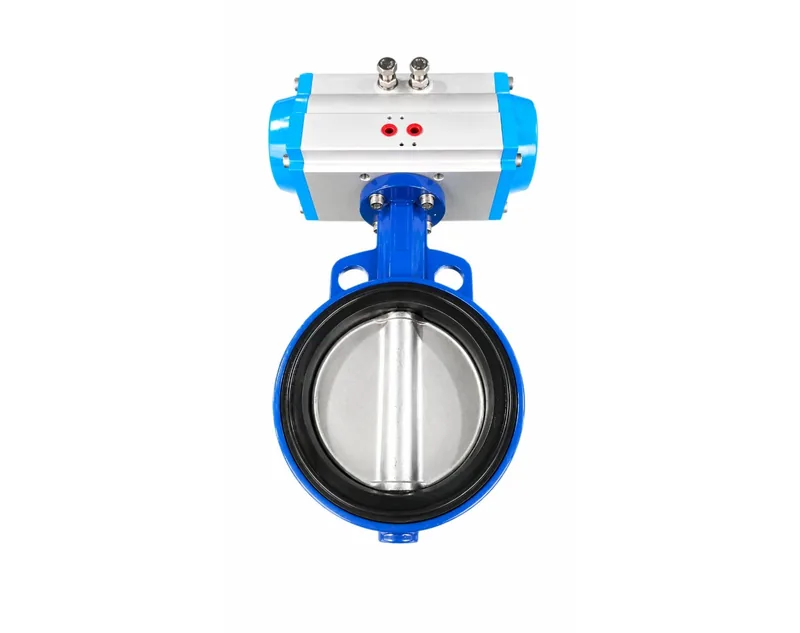
A pneumatic actuator cylinder converts compressed air energy into linear or rotary motion to operate valves. In quarter-turn applications (e.g., ball, butterfly, plug valves), the cylinder drives a piston that rotates a central pinion or yoke mechanism. The choice between rack-and-pinion and scotch-yoke designs directly affects torque output at different stroke positions, overall size, and maintenance frequency.
Both designs are available in double-acting and spring-return (single-acting) configurations. The cylinder bore diameter, supply pressure, and spring force determine the torque produced. Understanding these fundamentals is essential before comparing specific actuator types.
What to Consider When Choosing a Pneumatic Actuator Cylinder?
When evaluating pneumatic actuator cylinder options, buyers must align technical parameters with operational demands. Key considerations include:
- Torque profile: Does the application require consistent torque throughout the stroke or higher torque at the start/end?
- Cycle frequency: How many open/close cycles per hour? Friction and wear rates differ between designs.
- Space constraints: Rack-and-pinion units are typically more compact, while scotch-yoke actuators may require more radial clearance.
- Operating pressure: Standard systems use 4–8 bar. Some scotch-yoke models can handle higher pressures more efficiently.
- Environmental conditions: Temperature, humidity, and exposure to corrosive media affect material choices for cylinder housing and seals.
These factors should be documented in a specification matrix before engaging suppliers. For a detailed walkthrough of selection logic, refer to the pneumatic actuator cylinder solution guide.
Rack-and-Pinion vs Scotch-Yoke: Key Parameter Differences
This section compares the two primary pneumatic actuator cylinder designs used in industrial valve automation.
Rack-and-Pinion Pneumatic Actuator Cylinder
Option A: Uses dual pistons driving a central pinion. Torque output is relatively constant throughout the 90-degree rotation. Compact and lightweight. Common for smaller valve sizes (up to DN200).
Option B: More moving parts (pistons, pinion, bearings) may require periodic lubrication. Less suited for extremely high torque demands or very low temperatures without special seals.
Buyer note: Rack-and-pinion actuators are cost-effective for moderate torque ranges (typically 10–4000 Nm). They are widely available and interchangeable, making them a safe choice for standard on/off and modulating applications.
Scotch-Yoke Pneumatic Actuator Cylinder
Option A: Uses a single piston connected to a yoke that converts linear motion to rotary. Torque output is higher at the start and end of stroke (breakaway and reseating torque), which aligns with valve torque profiles for many quarter-turn valves.
Option B: Typically larger and heavier than rack-and-pinion equivalents for the same torque class. May require more robust mounting structures. Yoke pin wear can be a maintenance concern.
Buyer note: Scotch-yoke actuators excel in high-torque applications (above 4000 Nm) and where valve torque profile peaks at the open/close positions. They are often preferred for large diameter valves, sluice gates, and emergency shutdown valves.
Common Applications by Type
- Rack-and-pinion: Chemical dosing, water treatment, HVAC, and general industrial automation with moderate torque needs.
- Scotch-yoke: Oil and gas pipelines, power plant cooling systems, mining slurry valves, and other high-torque quarter-turn applications.
Key Specification Comparison
| Criterion | Rack-and-Pinion | Scotch-Yoke |
|---|---|---|
| Piston arrangement | Dual pistons, opposite | Single piston, offset |
| Torque profile | Constant throughout stroke | Higher at ends (breakaway & reseat) |
| Typical torque range | 10–4000 Nm | 1000–100,000+ Nm |
| Cycle life (estimated) | 1–2 million cycles (lubricated) | 0.5–1.5 million cycles (depends on yoke bearing) |
| Space efficiency | Compact (inline with valve) | Requires larger footprint |
| Common supply pressure | 4–8 bar | 4–10 bar |
Determining Bore Size and Torque Requirements
Bore diameter directly influences the force output of the cylinder. Follow these steps to match a pneumatic actuator cylinder to your valve.
Step 1: Define Valve Torque at Breakaway and Closing
Obtain torque curves from the valve manufacturer. The actuator must supply at least 1.2–1.5 times the valve torque to ensure reliable operation under worst-case conditions (e.g., differential pressure, dirt, temperature).
Step 2: Select Cylinder Configuration (Double-Acting vs Spring-Return)
For fail-safe open/close requirements, a spring-return (single-acting) actuator is needed. The spring torque subtracts from available output, so the bore must be larger to compensate. Double-acting actuators provide full torque in both directions.
Step 3: Calculate Required Force from Bore and Pressure
Torque = (Piston Area × Supply Pressure × Lever Arm) / Actuator Ratio. Use manufacturer torque charts to cross-check. Allow a safety margin of 25% for unknown friction or pressure drops.
After these calculations, validate the selected actuator against the valve's cyclic duty. For large or critical applications, consider requesting a pneumatic actuator cylinder sizing report from your supplier.
FAQ
What is the difference between single-acting and double-acting pneumatic actuator cylinders?
Single-acting (spring-return) actuators use air pressure to move in one direction and a spring to return. They are used for fail-safe positions. Double-acting actuators apply air pressure for both directions, providing full torque throughout the stroke and often higher cycle rates.
Can a scotch-yoke pneumatic actuator cylinder replace a rack-and-pinion in the same mounting footprint?
Rarely directly. Scotch-yoke actuators typically have a different mounting interface and larger footprint. Most installations require adapter plates or new bracketry. Always check ISO 5211 mounting dimensions (F03–F25) before substitution.
How do I calculate the required pneumatic actuator cylinder torque for my valve?
Obtain the valve's breakaway torque, running torque, and reseating torque from the manufacturer. Multiply the highest value by a safety factor (1.3–1.5). Compare with actuator torque curves at your available supply pressure. Spring-return actuators require additional spring torque margin.
What maintenance intervals are typical for these cylinders?
Rack-and-pinion actuators with grease-lubricated piston guides and bearings often require inspection every 500,000 cycles or annually. Scotch-yoke actuators may need yoke pin and bushing replacement every 1 million cycles. Always follow the OEM manual and consider the operating environment (dust, moisture) which may shorten intervals.
Is a larger bore always better for safety?
Not necessarily. Oversizing increases weight, cost, and air consumption. The correct bore provides adequate torque with a reasonable safety margin. Excess torque can damage valve stem seals and cause premature wear. Proper sizing is a balance between reliability and component life.
Conclusion
Choosing the appropriate pneumatic actuator cylinder depends on a systematic comparison of torque requirements, operating cycles, installation space, and environmental factors. Rack-and-pinion designs offer standardized, cost-effective solutions for moderate torque applications, while scotch-yoke configurations deliver high breakaway torque for large valves. Use the decision framework presented here to evaluate your specific parameters, and always validate with torque charts and realistic safety margins. For further guidance on integrating pneumatic actuators into your valve automation system, explore the comprehensive pneumatic actuator cylinder resource hub.