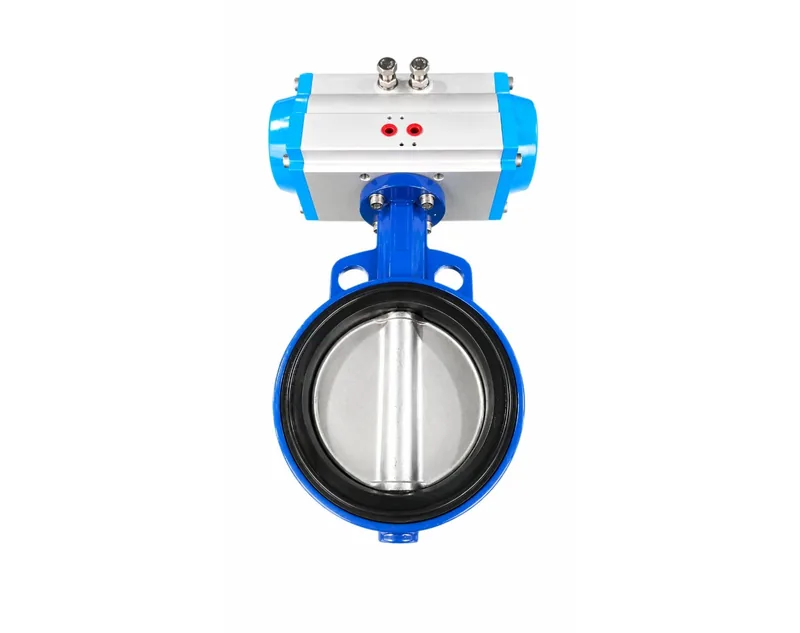
Article Overview: This guide provides a neutral, evidence-based introduction to pneumatic actuators for technical and procurement professionals. It covers operating principles, common types (rack and pinion vs. scotch yoke), selection criteria, quality indicators, and practical considerations for industrial automation. The goal is to build foundational knowledge before specification or purchasing decisions.
What Is a Pneumatic Actuator and How Does It Work?
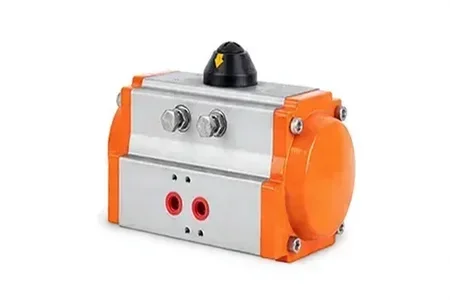
A pneumatic actuator is a device that converts compressed air energy into mechanical motion—typically rotary or linear—to control valves, dampers, or other process equipment. In industrial automation, pneumatic actuators are widely used for quarter-turn (90°) and multi-turn valve operations, offering a clean, reliable power source in environments where electric or hydraulic actuation may be impractical.
The core principle involves introducing compressed air into a chamber to move a piston or diaphragm. In rotary actuators, this linear motion is converted into rotational torque via a rack-and-pinion mechanism or a scotch yoke linkage. Key components include the actuator body, pistons, springs (for spring-return fail-safe), seals, and output drive. For a deeper look at the technology, explore the Pneumatic Actuator product range.
Why Choose a Pneumatic Actuator for Your Application?
Pneumatic actuators offer several advantages that make them a preferred choice in many B2B settings:
- Inherent safety: No electrical sparks, suitable for explosive or wet environments.
- High power density: Compact units can generate high torque relative to their size.
- Reliability and simplicity: Few moving parts, easy to maintain and repair.
- Fail-safe options: Spring-return (single-acting) designs close or open the valve on loss of air pressure.
- Speed control: Easy adjustment of cycle time via flow control valves.
- Cost-effectiveness: Lower initial cost compared to electric actuators for many applications.
These characteristics make pneumatic actuators suitable for industries such as chemical processing, petroleum, foodstuffs, and water treatment. For example, a hypothetical chemical plant may use pneumatic actuators to operate ball valves in a pipeline where flammable solvents are present, eliminating ignition risks.
Key Types of Pneumatic Actuators: Rack and Pinion vs. Scotch Yoke
Two dominant mechanical designs are used in quarter-turn pneumatic actuators. Understanding their differences helps in selecting the right solution.
Comparison: Rack and Pinion vs. Scotch Yoke Pneumatic Actuator
Rack and Pinion Actuator:
Uses a pair of pistons with integral racks engaging a central pinion gear. Provides constant torque output throughout the stroke. Compact, modular design with easy conversion between double-acting and spring-return. Common in lower-torque applications (e.g., quarter-turn ball valves up to ~2000 Nm).
Scotch Yoke Actuator:
Uses a sliding yoke mechanism driven by a single piston. Delivers higher torque at the start and end of stroke—ideal for valves requiring high breakaway torque (e.g., butterfly valves, plug valves). Often chosen for higher torque ranges (above 2000 Nm) and larger valve sizes. The HXY Series from JIMAI is an example of a modular scotch yoke design.
Buyer note: Application torque profile is the primary differentiator. If your valve requires high initial torque, a scotch yoke actuator may be more efficient. For constant torque needs, rack and pinion is simpler and often more economical.
How to Select the Right Pneumatic Actuator for Your System?
Selection requires aligning actuator specifications with valve requirements and operating conditions. Follow this process.
Step 1: Determine Valve Torque Requirements
Obtain the breakaway, running, and reseat torque values from the valve manufacturer. Include safety factors for aging, pressure variations, and temperature. Typical safety margin: 1.5–2x of calculated torque.
Step 2: Select Actuator Type and Size
Match the actuator torque curve to the valve torque profile. For constant torque, choose rack and pinion. For high breakaway, consider scotch yoke. Use actuator sizing software or tables from manufacturers. Verify supply pressure (typically 4–8 bar) and whether double-acting or spring-return is needed.
Step 3: Check Environmental and Certification Needs
Consider operating temperature range, corrosive atmosphere, and ingress protection (IP rating). For explosive environments, ensure ATEX/IECEx certification. Materials of construction (e.g., aluminum vs. stainless steel) affect durability.
Step 4: Evaluate Auxiliary Components
Accessories such as limit switch boxes, solenoid valves, and positioners are often required. Verify compatibility with the actuator mounting interface (VDI/VDE 3845, NAMUR, ISO 5211).
A practical checklist for procurement:
- Torque range at operating pressure
- Fail-safe action (spring open or spring close)
- Mounting pattern and output drive type
- Operating temperature and media compatibility
- Certifications required (ATEX, SIL, IP)
- Maintenance access and spare parts availability
Critical Quality Indicators in Pneumatic Actuator Manufacturing
When evaluating suppliers, look beyond basic torque specifications. Quality manufacturing affects long-term reliability and total cost of ownership. Key indicators include:
- Material treatment: Processes like nitriding, carburizing, and hard anodizing improve wear resistance of pistons and cylinders.
- Sealing technology: Low-friction seals (e.g., PTFE-filled) extend cycle life and reduce air leakage.
- Testing procedures: Each actuator should undergo leak testing, torque verification, and cycle testing before shipping.
- Traceability: Serial numbers and batch records enable root cause analysis in case of failure.
- Standards compliance: Adherence to ISO 5211 (mounting), ISO 15552 (cylinders), and relevant safety standards.
For example, JIMAI integrates CNC machining, robot arm automation, and hard anodizing in its Production Quality processes, which is a sign of attention to precision.
FAQ
What is the difference between double-acting and spring-return pneumatic actuators?
Double-acting actuators use air pressure to move the valve in both directions, requiring constant supply. Spring-return (single-acting) actuators use air to move in one direction and a spring to return. The spring provides fail-safe action on air loss but reduces available torque. Spring-return units also have a limited number of cycles before spring fatigue.
Can a pneumatic actuator be used for modulating control?
Yes, with a positioner and I/P transducer, pneumatic actuators can provide proportional control. However, response time and precision are generally lower than electric actuators. For throttling applications, consider a scotch yoke design with a high-quality positioner and proper air preparation.
How do I know if a rack and pinion or scotch yoke actuator is right for my valve?
Check the valve torque curve. If the valve requires high breakaway torque (like butterfly valves), scotch yoke is preferred. If torque is relatively constant (like ball valves), rack and pinion is simpler and cheaper. Also consider space constraints: scotch yoke actuators are longer but narrower.
What maintenance is required for pneumatic actuators?
Routine maintenance includes checking air filtration, lubricating moving parts (if applicable), inspecting seals for wear, and verifying torque output. For spring-return units, periodically test the spring operation. Most manufacturers recommend annual or bi-annual inspections depending on duty cycle.
Are there ATEX-certified pneumatic actuators available?
Yes, many suppliers offer ATEX and IECEx certified models for explosive atmospheres. Certification applies to the entire actuator assembly, including seals and coatings. Verify that the certificate covers your specific gas/dust group and temperature class.
Conclusion
Pneumatic actuators remain a fundamentally important component in industrial automation, offering safe, reliable, and cost-effective valve operation. Technical buyers should focus on understanding torque profiles, actuator types, and quality manufacturing indicators before making a selection. By following the evaluation steps outlined above and consulting with reputable suppliers, engineering teams can build robust control systems that minimize downtime. For further exploration, review the Pneumatic Actuator range and assess how these devices integrate with your existing Products line. Additionally, consider reading about Pneumatic Actuator Supplier Evaluation for procurement insights.
Related site pages: Home, Valve Gearbox, Bevel Gearbox, Declutchable Gearbox, Actuator Accessory, Application Center.