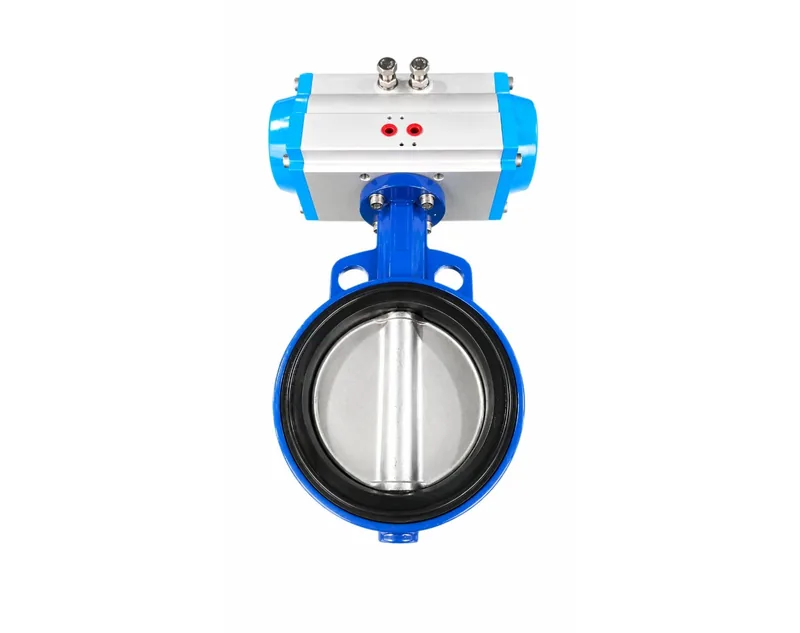
Article Overview: This article is written for procurement managers, sourcing teams, and project engineers who are evaluating pneumatic actuator suppliers. It provides a neutral, criteria-based framework to reduce purchase risks, improve RFQ accuracy, and avoid common gaps that lead to costly retrofit or downtime. Use this as a practical checklist before you issue your next RFQ.
What Is a Pneumatic Actuator and Why Does It Matter for Procurement?
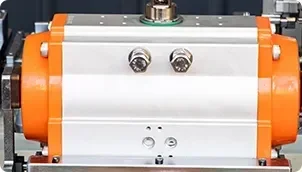
A pneumatic actuator converts compressed air energy into mechanical motion—typically rotary motion—to operate valves, dampers, or other industrial equipment. In process automation, these devices are critical for controlling flow, pressure, and direction in pipelines and production lines.
For procurement teams, the choice of pneumatic actuator directly affects system reliability, maintenance intervals, and total cost of ownership. A mismatch in torque, stroke, material compatibility, or environmental rating can lead to field failures, safety incidents, or unscheduled shutdowns. Therefore, understanding the technology and the supplier’s capabilities is a prerequisite for a successful purchase.
Key Applications of Pneumatic Actuators Across Industries
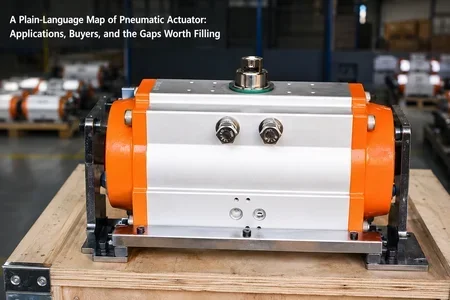
Pneumatic actuators are deployed across a wide range of industries. The table below outlines common application scenarios and the typical actuator requirements.
| Industry | Common Valve Type | Typical Actuator Requirements |
|---|---|---|
| Chemical & Petrochemical | Ball valves, butterfly valves | Corrosion-resistant materials, ATEX/IECEx certification |
| Oil & Gas | Quarter-turn valves, plug valves | High torque, fail-safe (spring return), explosion-proof accessories |
| Water & Wastewater | Butterfly valves, gate valves | Corrosion resistance, low maintenance, position feedback |
| Food & Beverage | Sanitary valves, mix-proof valves | Hygienic design, FDA-compliant seals, washdown environment |
| Power Generation | Steam valves, cooling water valves | High-temperature ratings, fail-safe positions, long cycle life |
When evaluating a supplier, ask for application-specific references or case studies. A supplier with experience in your industry will understand the operational nuances and can recommend the right Pneumatic Actuator solution for your process.
How to Evaluate Pneumatic Actuator Suppliers: A Procurement Checklist
Use the following checklist during supplier evaluation. Each checkpoint helps you validate what the supplier can deliver beyond a price list.
- Torque & Stroke Verification: Ask for torque output at supply pressure (minimum and maximum). Ensure the actuator can handle the valve’s break, running, and seating torque over the entire stroke range.
- Material & Coating Specification: Confirm body and shaft materials (e.g., aluminum with hard anodizing, stainless steel). Check if internal components are corrosion-resistant, especially for atmospheric or washdown conditions.
- Environmental Ratings: Request temperature range, IP protection, and any hazardous area certifications (ATEX, IECEx, SIL). These are not optional—they affect safety compliance and insurance.
- Actuator Type & Action: Distinguish between double-acting and spring-return (single-acting). For fail-safe applications, confirm spring-set torque and cycle count.
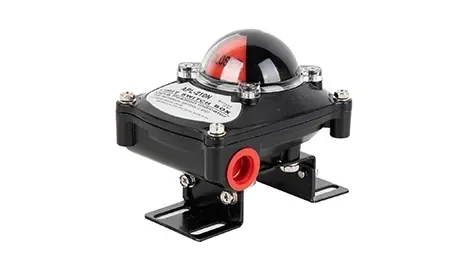
- Accessories Integration: Ensure limit switch boxes, solenoid valves, and positioners are compatible. Look for Actuator Accessory options that are tested with the actuator.
- Quality Assurance & Testing: Ask about production quality systems—ISO 9001, in-house testing (e.g., torque test, leak test, cycle test). A visit to Production Quality page can give insights.
- Spare Parts & Service Support: Evaluate lead times for spare parts, warranty terms, and technical support. Remote or difficult site access may require a supplier with local service.
- Lead Time & Delivery: Confirm standard and expedited lead times. Unrealistic delivery promises can derail your project.
Why Do Procurement Teams Overlook Actuator Type and Torque Margins?
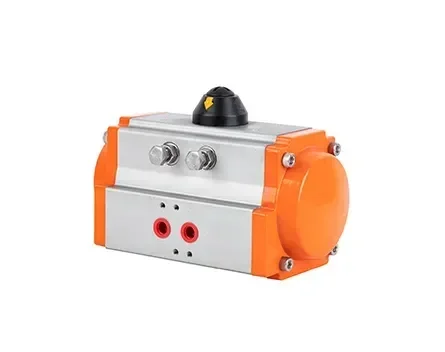
One of the most frequent gaps in RFQs is the lack of differentiation between rack-and-pinion and scotch-yoke pneumatic actuators. Both are quarter-turn devices, but their torque curves and mechanical efficiencies differ significantly.
- Rack-and-pinion actuators (like the Quarter Turn Rack and Pinion Pneumatic Actuator) offer a nearly linear torque output. They are compact and cost-effective for low-to-medium torque ranges, typically used on ball valves and butterfly valves up to about 8 inches.
- Scotch-yoke actuators (such as the HXY Series Scotch Yoke Pneumatic Actuator) provide a high torque at the start and end of stroke, matching the torque demand of plug valves and high-pressure ball valves. They are preferred for larger valves and high-torque applications.
Failing to specify the actuator type and required torque margin (often 1.5x to 2x valve torque) can result in an actuator that is either undersized (stalling) or oversized (wasted energy, higher cost). Always provide the valve torque profile to the supplier and ask for a torque margin calculation.
Common Procurement Gaps and How to Avoid Them
Even experienced buyers fall into predictable traps. Below are three gaps that repeatedly cause project delays and budget overruns.
- Misaligned Certification Requirements: Some buyers assume certifications are “all or nothing.” Identify specific certification standards (ATEX, SIL, NACE) that apply to your end use. Validate that the actuator and its accessories—like the Valve Gearbox—carry the same certificates.
- Ignoring Accessory Integration: An actuator is rarely purchased alone. Limit switch boxes, solenoid valves, and positioners must be mechanically and electrically compatible. Request a bill of materials for the whole assembly, not just the actuator.
- No Consideration of Lifecycle Cost: The cheapest actuator can become expensive if it requires frequent rebuilds or fails prematurely. Ask about seal life, bearing type, and maintenance intervals. A slightly higher upfront cost for a Rotary Pneumatic Actuator With Scale Indicator that includes position feedback may reduce commissioning effort.
By addressing these gaps in your RFQ, you shift from a price-based purchase to a value-based one, reducing risk over the asset’s life.
FAQ
What is the difference between double-acting and spring-return pneumatic actuators?
Double-acting actuators use air to move in both directions (open and close). Spring-return (single-acting) actuators use air to open and a spring to close (or vice versa). Spring-return is essential for fail-safe operation when air supply is lost.
How do I calculate the required torque for a pneumatic actuator?
You need the valve’s torque curve—break torque (to start motion), running torque, and seating torque. The actuator must provide at least 1.5 times the break torque for quarter-turn valves. Many suppliers offer torque calculation tools based on valve size, type, and differential pressure.
What certifications should I look for in an actuator for hazardous areas?
Common certifications include ATEX (Europe), IECEx (international), and NEC/UL (North America). For SIL-rated applications, the actuator may need to be part of a safety instrumented function. Always verify the certificate scope—it should cover the exact product model.
Can I use a pneumatic actuator with a manual override?
Yes, many pneumatic actuator designs include a manual override (e.g., declutchable gearbox). This allows operation during power or air loss. When evaluating, confirm the manual override type and whether it is suitable for emergency use.
What is the typical lifespan of a pneumatic actuator?
Lifespan depends on operating conditions, cycle frequency, and maintenance. In clean, dry air environments with moderate cycling, a high-quality actuator can last 500,000 to 1,000,000 cycles. In harsh conditions, consult the supplier for accelerated testing data.
Conclusion
Selecting the right pneumatic actuator supplier is not just about comparing prices—it is about aligning the product’s performance with your process requirements, site conditions, and long-term operational goals. By using the checkpoints and gaps outlined above, procurement teams can issue more precise RFQs, evaluate proposals on merit, and avoid costly post-purchase surprises. Start your evaluation by defining the application thoroughly, and always ask the supplier to validate their recommendations with documented evidence. For a deeper look into actuator types and configurations, explore Products and Pneumatic Actuator pages to see how specifications are documented.
Related site pages: Home, Bevel Gearbox, Declutchable Gearbox, Application Center, Chemical, Construction.