Article Overview: Selecting the right pneumatic actuator requires a structured comparison of types, performance specs, and application fit. This guide provides evaluation criteria, tradeoff analysis, and decision guidance to help you choose the optimal pneumatic actuator for your industrial needs.
Pneumatic actuators are widely used for valve automation in industries such as chemical, petroleum, power generation, and water treatment. With multiple designs available—including rack and pinion, scotch yoke, and rotary vane—understanding their differences is critical. This article compares the main types, highlights key performance tradeoffs, and offers selection checkpoints to reduce risk. For a broad overview of available products, visit the Pneumatic Actuator product line.
What Are the Main Types of Pneumatic Actuators?
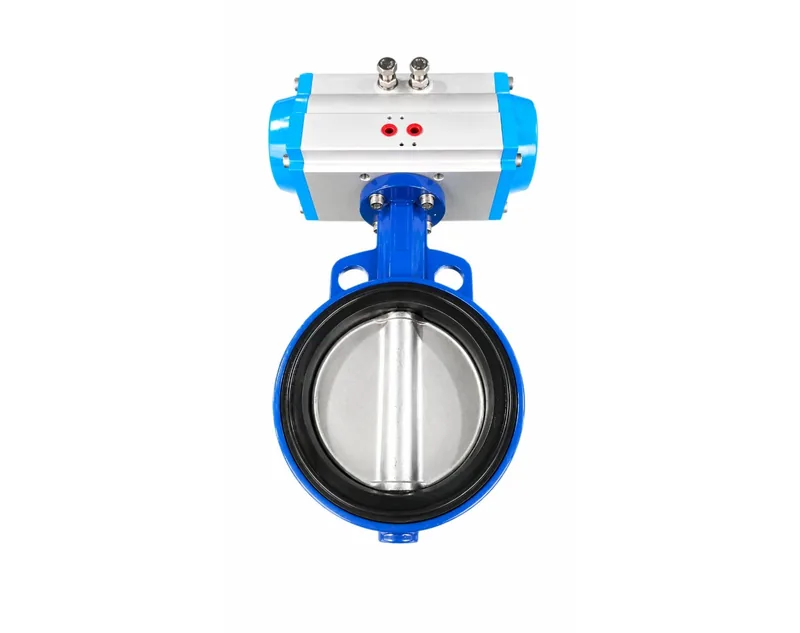
Pneumatic actuators convert compressed air energy into mechanical motion to operate valves. The two most common designs are rack and pinion and scotch yoke actuators. Each suits different torque requirements and valve types. Below is a comparison of these two fundamental options.
Option A: Rack and Pinion Pneumatic Actuator
Rack and pinion actuators use a piston and rack to rotate a pinion gear. They offer compact size, constant torque output throughout the stroke, and are ideal for quarter-turn valves like ball and butterfly valves. Common variants include the Quarter Turn Rack and Pinion Pneumatic Actuator and the 0 45 90 Degree Three Position Rotary Pneumatic Actuator. These actuators are often selected for applications requiring moderate torque and high cycle life.
Option B: Scotch Yoke Pneumatic Actuator
Scotch yoke actuators convert linear piston motion to rotary motion via a sliding yoke. They deliver increasing torque at the end of the stroke, making them ideal for high-torque applications such as large ball valves or plug valves. The HXY Series Scotch Yoke Pneumatic Actuator exemplifies this design. Scotch yoke actuators are bulkier but excel where high breakaway torque is needed.
Buyer note: Choose rack and pinion for standard quarter-turn valves with consistent torque demand; choose scotch yoke for valves requiring high starting torque, such as those handling viscous media or high-pressure differentials.
Another specialized variant is the Rotary Pneumatic Actuator With Scale Indicator, which provides visual position feedback—useful for applications requiring local indication without adding a separate positioner.
How to Evaluate Pneumatic Actuator Performance?
When comparing pneumatic actuators, focus on these key performance metrics:
- Torque rating: Both breakaway and running torque must exceed valve requirements with a safety factor.
- Operating pressure: Standard is 2–8 bar, but some actuators accept higher pressures.
- Temperature range: Seals and materials determine suitability for extreme environments.
- Spring return vs. double acting: Spring return provides fail-safe closure; double acting uses air for both directions.
- Corrosion resistance: Choose appropriate coating or material (e.g., epoxy, stainless steel) for harsh atmospheres.
For a detailed decision framework, visit the Service Support page, which offers technical documentation. Additionally, the Application Center provides use-case insights across industries.
Option A: Double Acting Pneumatic Actuator
Double acting actuators use air pressure for both opening and closing strokes. They provide higher torque output per unit size compared to spring return, and are often chosen for continuous duty cycles. Weight and cost are lower for the same torque.
Option B: Spring Return Pneumatic Actuator
Spring return actuators use a spring to close (or open) the valve on loss of air pressure. They are essential for fail-safe applications in safety-critical environments such as chemical processing or oil refineries. However, spring return actuators have lower torque output than double acting of the same size and require additional space for the spring pack.
Buyer note: Select double acting where continuous operation and lower initial cost are priorities. Choose spring return when fail-safe action is mandatory and the torque requirement is within the spring capacity. Performance tradeoffs include torque output versus safety functionality.
Key Tradeoffs in Pneumatic Actuator Selection
Decision-making involves balancing several tradeoffs:
- Torque vs. size: High torque typically means larger actuator. Consider space constraints and piping layout.
- Cost vs. durability: Stainless steel or high-coat actuators cost more but last longer in corrosive environments. Evaluate lifecycle cost.
- Speed vs. control: Faster actuation may compromise precise positioning; use with accessories like Actuator Accessory such as speed controllers or positioners.
- Maintenance vs. reliability: Rack and pinion designs are easier to maintain; scotch yoke may require less frequent service but more complex repairs.
For heavy-duty applications, consider integrating a Valve Gearbox or Bevel Gearbox to manage torque and manual override. In high-cycle environments, the Declutchable Gearbox offers additional control flexibility.
Application-Specific Fit for Pneumatic Actuators
Different industries place unique demands on pneumatic actuators. Below is a list of common scenarios and recommended actuator features:
- Chemical processing: Corrosion-resistant materials, spring return for safety, and compliance with industry standards. See Chemical applications.
- Petroleum and gas: High-torque scotch yoke for large valves, often with double-acting actuation for continuous operation. Explore Petroleum use cases.
- Construction and infrastructure: Compact rack and pinion actuators for HVAC and water distribution systems. Review Construction examples.
- Food and beverage: Sanitary designs with polished finishes and quick disassembly. Check Foodstuffs resources.
- Power generation: High-cycle, fail-safe actuators for cooling water and steam control. The Electricity sector page offers guidance.
Each industry may require specific certifications (ATEX, SIL) and accessories. Always validate with supplier documentation—visit the Download area for datasheets and manuals.
Frequently Asked Questions
What should buyers evaluate first about pneumatic actuator?
Start with fit, evidence-backed requirements, and supplier proof relevant to pneumatic actuator before shortlisting vendors.
How can teams reduce procurement risk for pneumatic actuator?
Use structured comparison, validate specifications early, and review implementation or quality checkpoints with documented evidence.
Conclusion
Selecting the right pneumatic actuator requires careful evaluation of torque profiles, operating conditions, and fail-safe requirements. Rack and pinion actuators offer compactness and consistent torque; scotch yoke provides high breakaway torque. Double acting suits continuous duty, while spring return ensures safety. Use the structured comparison blocks and checkpoints in this guide to make an informed decision. For further assistance, explore the Support section and related resources.