Article Overview: Selecting the right pneumatic actuator types is critical for valve automation projects. This guide helps procurement managers, sourcing teams, and project engineers compare rack-and-pinion, scotch-yoke, and linear designs. You will learn key selection criteria, procurement checkpoints, and how to evaluate suppliers objectively. The article covers application fit, torque requirements, fail-safe configurations, and practical RFQ steps to avoid common purchasing mistakes.
What Are the Main Pneumatic Actor Types for Valve Automation?
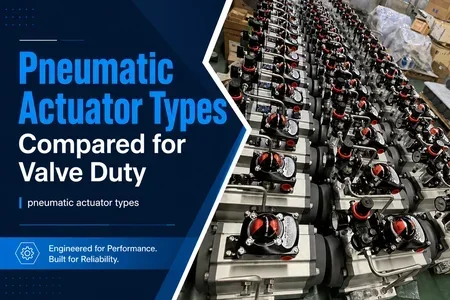
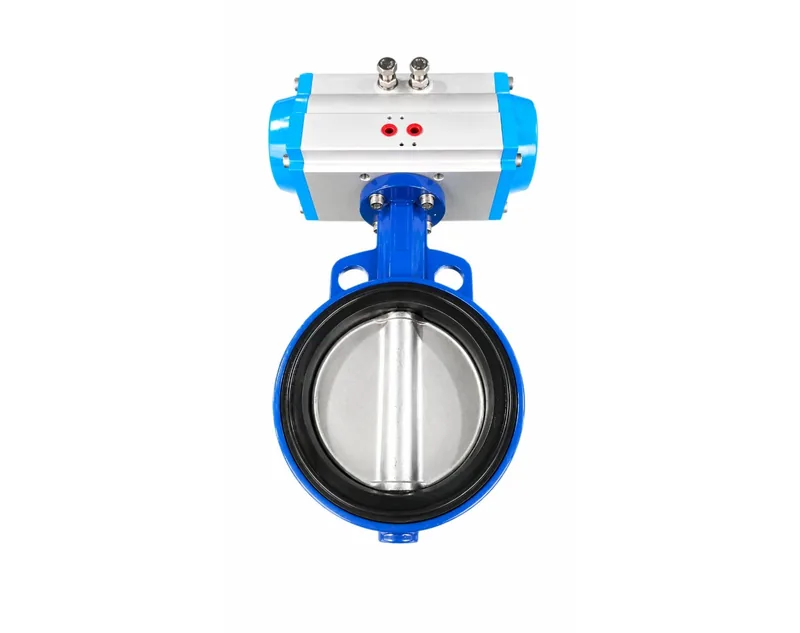
Pneumatic actuators convert compressed air energy into mechanical motion to operate valves. Three primary pneumatic actuator types dominate industrial applications:
- Rack-and-pinion actuators: Use a linear piston with a rack that rotates a pinion gear. They provide compact, quarter-turn (90°) motion typical for ball and butterfly valves. Available in double-acting and spring-return (single-acting) configurations.
- Scotch-yoke actuators: Convert linear piston movement into rotary motion via a sliding yoke mechanism. They generate higher torque at the end of stroke, ideal for high-torque applications like large ball valves or gate valves requiring 90° or multi-turn operation.
- Linear actuators: Direct linear motion for gate, globe, or pinch valves. Can be piston-style or diaphragm-style, used where straight-line motion is needed rather than rotation.
Each type has distinct torque profiles, speed characteristics, and space considerations. Understanding these differences is essential before issuing an RFQ.
How to Choose Between Rack-and-Pinion and Scotch-Yoke Actuators?
The choice between these two common pneumatic actuator types depends on valve torque demand, cycle frequency, and ambient conditions. Below is a buyer-side comparison to guide your evaluation.
Rack-and-Pinion vs. Scotch-Yoke
Option A: Rack-and-Pinion
Best for low to moderate torque applications (up to ~4000 Nm). Compact footprint, consistent torque throughout stroke, fast cycling (up to 1-2 Hz). Suitable for small to medium ball valves, butterfly valves. Lower cost per unit. Common in chemical, water treatment, and food processing.
Option B: Scotch-Yoke
Best for high-torque applications (up to 300,000 Nm). Torque increases at stroke ends, matching breakaway torque of large valves. Slower cycling but robust for frequent on/off service. Ideal for heavy-duty oil and gas, power generation, and large-diameter valves.
Buyer note: If your valve breakaway torque is high but running torque is low, scotch-yoke may be more efficient. For equal torque demands, rack-and-pinion is simpler and cheaper. Always request a torque profile curve from potential suppliers.
Also consider environmental factors: rack-and-pinion designs are more sensitive to side loads, while scotch-yoke can tolerate higher side forces. Consult your valve manufacturer and actuator supplier for validated torque–pressure calculations.
Key Procurement Criteria for Pneumatic Actuator Types
When sourcing pneumatic actuator types, procurement teams should validate these technical and commercial criteria early in the evaluation process.
- Torque output at rated pressure: Check that the actuator delivers required torque across the full stroke range, including safety margins (typically 20–50% above valve demand).
- Fail-safe configuration: Specify spring-return (for fail-closed or fail-open) or double-acting (for process systems where position is held by pressure). Verify spring set materials and fatigue life.
- Temperature and corrosion resistance: Confirm actuator housing material (aluminum, stainless steel, or reinforced polymer) and internal seals compatible with ambient and process temperature extremes.
- Cycle life and maintenance intervals: Request documented cycle life testing data. Some actuators require lubrication every 100,000 cycles; others are maintenance-free up to 1 million cycles.
- Standards and certifications: Ensure compliance with ISO 5211 (mounting flange), ISO 15552 (for linear), ATEX or IECEx for hazardous zones, and SIL rating if applicable.
Request a technical data sheet that includes pressure-to-torque graphs, dimensional drawings, and material certificates. Avoid suppliers who cannot provide third-party test reports.
Step 1: Define Torque Requirements
Collect valve torque data from your valve supplier: breakaway torque, running torque, and end-of-stroke torque. Add a safety factor based on application criticality (1.3x for standard, 1.5x for high-severity). This defines the minimum actuator output at rated supply pressure.
Step 2: Select Actuator Type and Configuration
Match the torque profile to actuator type. For quarter-turn valves, decide between rack-and-pinion or scotch-yoke. Determine double-acting vs. spring-return. Consider operating frequency and available air supply pressure (typically 4–8 bar).
Validating Supplier Capabilities for Pneumatic Actuator Types
Not all suppliers have equal expertise in all pneumatic actuator types. Use these checkpoints to reduce procurement risk.
- Manufacturing experience: Ask how long they have produced each type. A supplier focused on rack-and-pinion may not have deep scotch-yoke knowledge.
- Testing facilities: Verify they can perform torque mapping, burst pressure testing, and cycle life tests in-house. Request witness testing during production.
- Customization flexibility: Some suppliers offer modular options (e.g., different yoke profiles, adjustable stroke stops). Ensure they can adapt to your valve end connections.
- Delivery lead times: Standard actuators may be stock items, but custom configurations can add weeks. Confirm lead times before ordering.
- After-sales support: Check availability of spares, repair services, and technical documentation (IOM manuals, exploded views).
Request references from buyers using similar pneumatic actuator types for comparable applications. A site visit or virtual factory tour is advisable for large-volume contracts.
RFQ Checklist for Pneumatic Actuator Types
To ensure accurate quotes, include these details in your request for quotation.
- Valve type and size, with bore/stroke dimensions.
- Operating media (compressed air, nitrogen, other gas) and supplied pressure range.
- Required torque at supply pressure (include safety factor).
- Fail-safe position: spring-return vs. double-acting.
- Ambient temperature range and exposure to corrosive environment.
- Preferred actuator type (rack-and-pinion, scotch-yoke, or linear).
- Mounting standard (ISO 5211 for quarter-turn, or specific flange).
- Required certifications: ATEX, SIL, NACE, or other.
- Cycle life expectation and maintenance philosophy.
- Quantity needed and desired delivery schedule.
When reviewing quotes, look for complete torque–pressure tables and clear statement of warranties. Compare not only price but total cost of ownership including predicted maintenance costs.
For a comprehensive overview of pneumatic actuator types and their applications, visit our pneumatic actuator types hub. You can also explore our product range for actuators designed to meet diverse valve automation needs.
FAQ
What is the difference between double acting and spring return pneumatic actuators?
Double-acting actuators use air pressure to both open and close the valve. Spring-return (single-acting) actuators use air to compress a spring for one direction; the spring returns the valve to its fail-safe position when air pressure is lost. Choose spring-return for safety-critical applications where loss of power must move the valve to a safe state.
How do I calculate the required torque for a pneumatic actuator?
Obtain the valve's dynamic torque curve from the valve manufacturer. Identify breakaway torque (starting torque) and running torque at operating differential pressure. Multiply breakaway torque by a safety factor (1.3–1.5) to set the minimum actuator output. The actuator data sheet must show torque output at your available supply pressure.
Can scotch-yoke actuators be used for quarter-turn valves?
Yes, scotch-yoke actuators typically provide 90° rotation for quarter-turn valves. Some designs offer adjustable stroke angles (e.g., 60°–90°). They are especially suited for large or high-torque valves such as those in oil and gas pipelines.
What maintenance is required for rack-and-pinion actuators?
Rack-and-pinion actuators generally require periodic lubrication of the pinion gear and piston seals—every 100,000 cycles in light duty, more frequent in high-speed or high-temperature service. Check for air leakage and corrosion on external surfaces. Many modern units use self-lubricating materials to reduce maintenance intervals.
Are there linear pneumatic actuator types besides piston-style?
Yes, diaphragm actuators are a common linear type, using a flexible diaphragm instead of a piston. They are often used for modulating control valves due to their low friction and good position accuracy. However, they have shorter stroke lengths and lower force output compared to piston linear actuators.
Conclusion
Choosing the right pneumatic actuator type directly affects valve performance, safety, and total cost of ownership. By understanding the torque profiles and application strengths of rack-and-pinion, scotch-yoke, and linear designs, procurement teams can make informed decisions. Use the procurement checkpoints and RFQ checklist provided here to compare suppliers objectively and reduce risk of misapplication. A well-prepared evaluation process leads to a reliable, cost-effective automation solution.