Article Overview: This guide helps procurement managers, sourcing teams, and project engineers prepare for supplier evaluation and RFQ for linear pneumatic actuator solutions. It covers key specifications, validation checkpoints, supplier capability assessment, and best practices to ensure you select the right actuator for your application.
What Key Specifications Should You Consider for Linear Pneumatic Actuators?
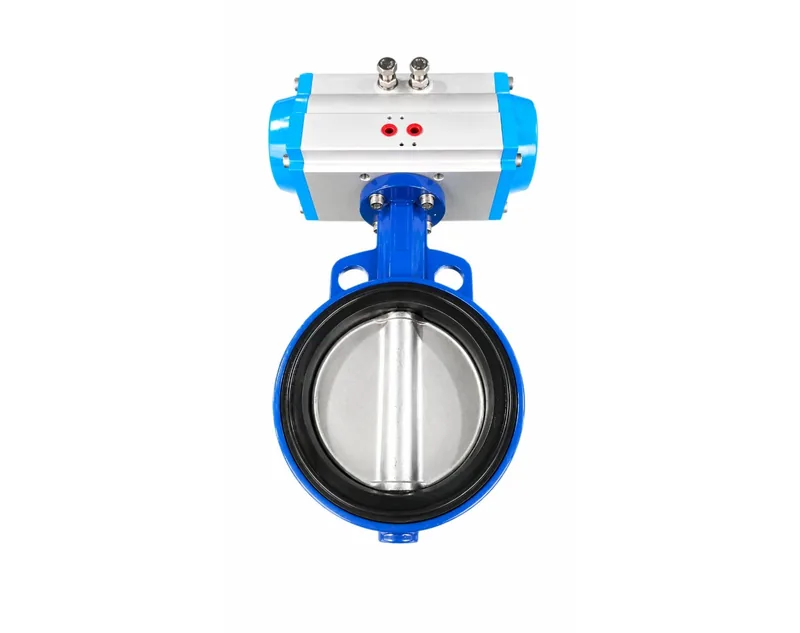
A linear pneumatic actuator converts compressed air energy into linear mechanical motion. Unlike quarter-turn rotary actuators, linear actuators produce straight-line output, making them essential for applications such as valve gate lifting, conveyor diverters, and press clamping. When sourcing these components, you must evaluate a set of core specifications to ensure compatibility with your process.
- Bore size and stroke length: These determine the force and travel distance. Confirm that the actuator can deliver the required thrust at your operating pressure.
- Operating pressure range: Most linear pneumatic actuators operate between 2 and 8 bar. Verify that your plant air supply falls within this band.
- Temperature rating: Seals and lubricants degrade outside rated limits. Standard models cover -20°C to +80°C; high-temperature options may reach 150°C.
- Mounting style: Foot, flange, clevis, or trunnion mounting must match your mechanical interface. Misalignment can cause premature seal wear.
- Material construction: Aluminum, stainless steel, or coated carbon steel affects corrosion resistance and weight. Choose based on ambient conditions.
- Double-acting vs. spring-return: Double-acting actuators extend and retract with air; spring-return actuators fail to a safe position. This is critical for safety systems.
What to Validate Before Purchasing a Linear Pneumatic Actuator?
Before issuing an RFQ, create a validation checklist aligned with your process requirements. Skipping this step often leads to costly retrofit or downtime. Use the following flow to verify each candidate actuator.
Step 1: Define Load and Stroke Requirements
Calculate the total force needed: thrust = pressure × effective piston area. Add a safety margin of 25% to account for friction and aging seals. Confirm that the stroke length covers the full valve travel plus 10–15 mm cushion at each end.
Step 2: Assess Operating Conditions
Collect ambient temperature extremes, humidity levels, and exposure to dust or chemicals. If the actuator will be installed outdoors or in washdown zones, request IP65 or higher ingress protection and corrosion-resistant materials.
Step 3: Verify Control and Interface Compatibility
Check the actuator’s pilot port size (e.g., G1/4, NPT 3/8) and switch type (solenoid valve, limit switch box). Confirm that electrical connections match your control voltage (24 VDC, 110 VAC, etc.) and that any position feedback matches your DCS or PLC input.
How to Evaluate Supplier Capability for Linear Pneumatic Actuators?
Supplier selection directly affects product quality, lead time, and after-sales support. Use the following evaluation criteria as part of your sourcing process.
- Certification and compliance: Request ISO 9001, CE, and ATEX certifications if the actuator will be used in hazardous areas. Suppliers should provide test certificates for each batch.
- Manufacturing footprint: Review whether the supplier operates in-house machining, assembly, and testing. Vertically integrated manufacturers typically offer better quality control and shorter lead times.
- Reference projects: Ask for case studies or client references in your industry (e.g., chemical processing, water treatment). Proven experience reduces implementation risk.
- Warranty and support: Typical warranty periods range from 12 to 24 months. Confirm that spare parts are available and that technical support can respond within 48 hours for troubleshooting.
- Customization capability: If your application requires non-standard stroke, special coatings, or stroke-adjustment features, ensure the supplier can accommodate modifications without exorbitant lead times.
RFQ Best Practices for Linear Pneumatic Actuators
A well-structured RFQ helps suppliers provide accurate pricing and identifies potential mismatches early. Follow these steps to streamline the request process.
Step 1: Provide Complete Application Details
Include operating pressure, ambient temperature, required stroke and force, cycle frequency, and any special environmental conditions. Attach a schematic of the mounting interface if available. The more detail you provide, the fewer clarification rounds you will need.
Step 2: Request Performance Curves and Dimensional Drawings
Ask for force-stroke curves, breakaway pressure data, and dimensional outline drawings in 2D CAD format. These documents allow your engineering team to verify clearance and confirm that the actuator meets process dynamics.
Step 3: Ask for Installation and Maintenance Documentation
Requests for installation manuals, lubrication schedules, and parts lists indicate a supplier’s readiness to support long-term reliability. Inquire about lead time for spare seal kits and actuator rebuild services. A supplier that offers global support reduces your operational risk.
For additional guidance, review linear pneumatic actuator products and related resources available from reputable manufacturers.
FAQ
What is the difference between double-acting and spring-return linear pneumatic actuators?
Double-acting actuators use compressed air to both extend and retract, offering balanced force in both directions. Spring-return actuators (single-acting) use air to move in one direction and a spring to return, providing fail-safe closure or opening. Choose spring-return for safety-critical applications where loss of air must cause a safe state.
How do I calculate the required force for a linear pneumatic actuator?
Force (N) = Pressure (Pa) × Piston area (m²). For practical selection, use operating pressure in bar and multiply by the piston area in cm² × 10 to get newtons. Always add a 25% safety margin to account for friction and aging. Consult supplier force charts for exact values.
Can a linear pneumatic actuator be used for flow control?
Yes, when paired with a positioner (e.g., electro-pneumatic positioner) and a control valve, a linear pneumatic actuator can provide proportional positioning for modulating applications. Ensure the actuator’s stroke resolution and response time meet your control loop requirements.
What materials are commonly used in linear pneumatic actuators?
Common materials include anodized aluminum (lightweight, corrosion-resistant), stainless steel (for corrosive or high-temperature environments), and carbon steel with protective coatings (cost-effective for dry indoor applications). Seal materials vary from NBR (standard) to FKM or silicone for extreme temperatures.
How often should a linear pneumatic actuator be maintained?
Maintenance frequency depends on cycle rate and operating conditions. For general industrial use, inspect seals, lubrication, and piston rod condition every 500,000 cycles or annually, whichever comes first. High-cycling or harsh environment applications require more frequent checks. Follow the manufacturer’s recommended schedule.
Conclusion
Purchasing a linear pneumatic actuator involves more than comparing prices. By defining specifications, validating operating conditions, evaluating supplier capability, and following structured RFQ practices, you can reduce procurement mistakes and ensure long-term reliability. Start your sourcing process with a clear checklist and reference proven solutions from established manufacturers. For detailed product information and technical support, explore available linear pneumatic actuator solutions from reputable suppliers.