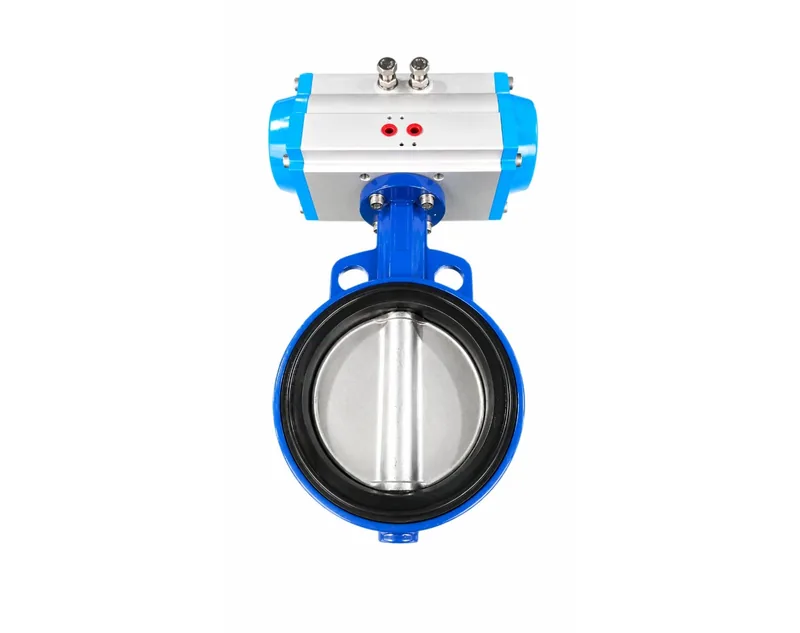
How to order valve gearbox
You have the valve datasheet, the project schedule, and a shortlist of suppliers. What you may not have is a clear picture of exactly what information the gearbox supplier needs before they can issue a quotation you can actually compare against alternatives.
Missing data produces one of two outcomes: a generic quotation that still requires three rounds of clarification, or a gearbox specified on assumptions that only surface as a problem during installation. This guide provides the seven data groups to compile before sending any valve gearbox RFQ, with worked examples and the verification points that separate a comparable enquiry from a delayed one.
The Valve Gearbox product overview provides context on the configurations available across quarter-turn and multi-turn applications, but the selection logic starts with the data you provide — not the model number.

Data Group 1: Valve Identification and Duty
A gearbox is not selected in isolation. It sits between a valve and an input source, and its performance depends on how well the three match. The first RFQ section should identify the valve precisely enough that the supplier can verify torque data and mounting compatibility without guessing.
What to provide:
-
Valve manufacturer and model number
-
Valve type (butterfly, ball, plug, gate, globe, or other)
-
Size in DN or NPS
-
Pressure class (PN, ASME Class, or API rating)
-
Valve duty: on/off or modulating; normal operation and emergency operation
Valve duty matters because it changes the torque profile. A butterfly valve used for isolation sees break-to-open torque primarily at the seated position. The same valve used for throttling may experience continuous running torque and dynamic load variations that affect gearbox wear. An RFQ that states “butterfly valve, DN300” without stating duty leaves the supplier to assume the simpler case.
According to a 2026 RFQ checklist published by XHVAL, quoting an actuated butterfly valve on an actuator model and an ISO mounting-flange code alone is insufficient — the valve, mounting interface, gearbox, actuator, and controls must work as one assembly, and duty conditions affect the selection of every component in that chain.
Data Group 2: Torque Data — The Governing Selection Parameter
Torque is the number that sizes the gearbox. It is also the data group most frequently provided incompletely. An RFQ that states “valve torque: 2,500 N·m” without specifying which torque value that figure represents produces a quotation that cannot be verified against the valve’s actual worst-case demand.
Which torque values to request from the valve manufacturer
For quarter-turn valves (ball, butterfly, plug):
-
Break-to-open torque — the torque required to move the valve from the fully closed position. This is typically the highest value and usually governs gearbox selection.
-
Running torque — the torque required to maintain movement through the travel.
-
End-to-close torque — the torque required to seat the valve fully.
-
Maximum torque — the highest torque the valve may encounter under any operating condition, including the maximum allowable stem torque.
For multi-turn valves (gate, globe):
-
Unseating thrust
-
Running thrust
-
Seating thrust
-
Stem torque
The distinction between torque types is not academic. A gearbox sized on running torque alone will stall when the valve is unseated from a long-closed position. A gearbox sized without reference to maximum allowable stem torque risks transferring excess torque into the stem if the gearbox is oversized beyond the valve’s structural limit.
The safety factor question
Safety factors account for uncertainty in torque estimates, seal aging, surface deposits, packing friction, temperature effects, and infrequent operation. There is no universal multiplier, and the RFQ should state the basis explicitly.
| Source / context | Safety factor basis | Practical implication |
|---|---|---|
| Project specification (pipeline / EPC) | Often 1.5× break-to-open torque | State “1.5× per project spec” in the RFQ |
| General supplier guidance (quarter-turn, clean service) | 1.25–1.5× break torque | Minimum for clean, frequently operated valves |
| Modulating / high-cycle service | Higher allowance (+80–100% in some guidance) | Continuous modulation changes the load profile |
| Gate / globe service | Commonly 1.5× seating or unseating thrust | Multi-turn thrust governs, not rotational torque alone |
A 2026 buyer guide on sourcing worm gearboxes notes that required operating torque including a safety factor — commonly 1.5× break-to-open torque — should be stated alongside stem dimensions and keyway details, and that torque test reports per batch are a reasonable verification requirement.
The practical rule for the RFQ: state the safety factor and its source. If the project specifies 1.5×, write “1.5× break-to-open per project specification.” If no factor is specified, state “safety factor to be confirmed by supplier based on valve data” and review the recommendation against the maximum allowable stem torque.
The JMG series covers output torque from 260 N·m to 150,000 N·m, with torque testing performed on each unit before dispatch so that the rated figure can be traced to a documented test record rather than a catalogue claim alone.
Data Group 3: Mounting Interface and Stem Dimensions
A gearbox with the correct torque rating but the wrong flange size cannot be installed. The mounting interface is the second most common source of order errors, and the RFQ should close this gap before the quotation stage.
What to provide:
-
Valve top-flange ISO 5211 designation (for example, F10, F12, F16)
-
Stem or drive dimensions: shaft diameter, keyway width and height, square or flat head dimensions
-
Drive type: keyed, square head, flat head, or spline
-
Mounting orientation relative to the pipeline
-
Whether direct mounting is possible or a mounting kit is required
ISO 5211:2026 (Edition 4, published February 2026) specifies flange dimensions, driving-component dimensions, and reference torque values for the interface between part-turn valves and actuators or gearboxes. A gearbox quotation that references only “ISO 5211” without stating the specific flange code and drive dimensions is incomplete — the standard defines a family of interfaces, not a single universal connection.
When direct mounting is not practical, ISO 5640:2024 provides requirements for metallic mounting kits, including torque-transmitting components and environmental corrosion protection. If a mounting kit is part of the scope, the RFQ should request the coupling and bracket material, allowable torque, coating, and final assembly drawing.
The JMG series uses a four-position opening design with holes spaced at 90-degree intervals, which provides more connection orientation options than a two-position arrangement and allows the input to be oriented to the available access space. For space-constrained installations, the JMG Series Rotary Valve Gearbox With Scale Indicator adds a visible degree scale so the open/close position can be confirmed locally without separate instrumentation.

Data Group 4: Operating Environment and Protection Class
The environment determines material selection, sealing arrangement, and whether certification documentation is applicable to the selected model.
Because environmental requirements vary significantly by industry — from corrosive chemical exposure to abrasive metallurgical dust to washdown-grade food processing — the industry application overview maps typical operating conditions to the IP rating, material, and coating decisions that follow. Reviewing the conditions closest to your installation before finalizing the RFQ helps avoid specifying a protection class that is either inadequate for buried service or unnecessarily high for a sheltered indoor location.Two gearboxes with identical torque ratings can have different service lives if the IP rating or coating does not match the installation.
What to provide:
-
Indoor, outdoor, washdown, buried, or continuously submerged
-
Ambient temperature range (minimum and maximum)
-
Corrosive atmosphere or soil conditions
-
Hazardous area classification, if applicable
-
Required IP rating: IP67 or IP68
IP67 versus IP68: specify the installation, not the preference
IP67 and IP68 are not interchangeable grades on a quality scale. They describe different service conditions:
-
IP67 — protection against dust ingress and temporary immersion, typically defined as up to 1 metre for 30 minutes.
-
IP68 — protection against continuous submersion under specified conditions; common manufacturer definitions include depths up to 15 metres for 72 hours, though the exact conditions vary and should be stated in the RFQ.
A buried valve requires IP68 because the gearbox remains submerged in soil moisture or groundwater over its service life. An outdoor but above-grade valve may be adequately protected by IP67. Specifying IP68 “to be safe” on an above-grade application adds cost without addressing a real failure mode; specifying IP67 on a buried application introduces a predictable failure path.
JIMAI gearbox configurations are available with IP67 protection as standard and IP68 as an option depending on the series and model.
Data Group 5: Actuation Mode and Emergency Operation
The input source — handwheel, electric actuator, or pneumatic actuator — determines the gearbox configuration, the input interface, and whether a manual override function is required.
What to provide:
-
Primary actuation mode: manual handwheel, electric actuator, pneumatic actuator, or remote extension
-
If manual: handwheel or chainwheel, and available operating space
-
If actuator-driven: actuator make, model, output torque, and mounting interface
-
Emergency operation requirement: is manual operation needed during power or air failure?
A gearbox paired with a pneumatic actuator requires the gearbox input interface to match the actuator output drive, and the combined assembly must be verified for torque and mounting compatibility. When manual override is required during air failure, a declutchable gearbox is mounted between the valve and the actuator. A hand lever disengages the actuator drive and allows manual operation.
For buried valves where the handwheel must remain at surface level, a pipe network extension configuration places the input at grade while the gearbox remains at the valve. The JMG Series With Pipe Network is configured for this installation pattern, and the RFQ should state the required extension length and the handwheel orientation at surface level.
Data Group 6: Quantity, Delivery, and Commercial Terms
Technical data determines which gearbox can be supplied. Commercial data determines whether it can be supplied on the required schedule.
What to provide:
-
Order quantity and any spares requirement
-
Required delivery date or project milestone
-
Destination port or site
-
Required certification documentation (mill certificates, test reports, ATEX/IECEx, SIL, CE)
-
Any packaging or marking requirements (nameplate, tag numbering, logo)
Delivery expectations should be realistic. Standard gearbox configurations may have shorter lead times than customized units with non-standard flange dimensions, special coatings, or extended input shafts. Stating the required date and the acceptable flexibility separately allows the supplier to propose a configuration that meets the schedule rather than declining on a date that was not a hard constraint.
For projects requiring CAD integration, the RFQ should state the file format required (STEP/STP, IGES, or native format) and whether 2D dimensional drawings are also needed. JIMAI supplies 3D and 2D files for all JMG series models to support space verification before order confirmation, and catalogue downloads are available for each product page.
Data Group 7: Documentation and Certification Requirements
Certification and test documentation should be requested at the RFQ stage, not after the order is placed. The scope of a certificate — which models, which revisions, which protection classes — varies by product series, and a general certificate reference is not a substitute for confirming that the exact selected model is covered.
What to request:
-
Model-specific torque test record
-
Material certificates for the housing, worm, gear, and input shaft (if required by project specification)
-
IP rating test documentation for the selected protection class
-
ATEX, IECEx, SIL, or CE documentation, where applicable, with the exact model and revision identified
-
General arrangement drawing and interface drawing for approval before shipment
-
Installation, operation, and maintenance (IOM) documentation
A 2026 RFQ checklist notes that required documents typically include the GA drawing, interface drawing, torque sheet, datasheets, IOM, and test records — and that these support approval before shipment rather than after installation. Requesting them in the RFQ makes documentation a quotation line item rather than a post-order negotiation.
JIMAI’s quality system covers ISO 9001, ISO 14001, CE, ATEX, and SIL 3, with certification scope and protection class varying by series and model. The RFQ should state which certificates are required for the project and confirm that the proposed model falls within that scope.
RFQ Data Checklist: One-Page Summary
The table below consolidates the seven data groups into a pre-send audit. If any row cannot be completed, that is the gap to close before the enquiry is issued.
| Data group | What to provide | Why it matters |
|---|---|---|
| Valve identification | Manufacturer, model, type, size, pressure class, duty | Confirms valve configuration and torque basis |
| Torque data | Break-to-open, running, end-to-close, maximum; safety factor with source | Sizes the gearbox output rating |
| Mounting interface | ISO 5211 flange code, stem dimensions, drive type, direct mount or kit | Confirms mechanical compatibility |
| Environment | Installation type, temperature range, IP67 or IP68 requirement | Drives sealing, materials, and coating |
| Actuation | Manual / electric / pneumatic; emergency override requirement | Determines gearbox configuration and input interface |
| Quantity and delivery | Order quantity, spares, required date, destination | Determines commercial feasibility and schedule |
| Documentation | CAD format, torque test record, certification scope, drawings | Supports project approval and installation verification |
Practical Scenario: A Buried Butterfly Valve RFQ
Application: DN400 butterfly valve on a water distribution main, installed 2.5 metres below grade. Break-to-open torque: 3,200 N·m. Running torque: 1,400 N·m. Project safety factor: 1.5×. The operator must open and close the valve from surface level. The installation is subject to periodic flooding.
| RFQ field | Entry |
|---|---|
| Valve | Butterfly, DN400, PN16, on/off duty |
| Torque | Break-to-open 3,200 N·m; running 1,400 N·m; 1.5× safety factor per project spec → required gearbox output ≥ 4,800 N·m |
| Mounting | ISO 5211 F12, square stem 36 mm, direct mount |
| Environment | Buried, periodic flooding; ambient -10°C to +60°C; IP68 required |
| Actuation | Manual handwheel at surface level; pipe network extension, 2.5 m |
| Quantity / delivery | 12 units + 2 spares; required on site within project window |
| Documentation | STEP files for space verification; torque test record per unit; IP68 test documentation |
In this scenario, a standard handwheel gearbox solves the torque problem but fails the access requirement. A gearbox rated IP67 addresses outdoor exposure but not buried service. The pipe network extension and IP68 protection are configuration requirements, not options to be considered after model selection. The JMG Series Rotary Valve Gearbox With Pipe Network is configured for this combination of extended input and buried protection.
Next:From Checklist to Comparable Quotation
Once the seven data groups are complete, the quotation process shifts from clarification to comparison. Suppliers receive the same dataset and can propose specific models with verified torque ratings, mounting dimensions, and protection classes rather than generic series references.
The next verification step is matching the proposed gearbox output against the valve’s break-to-open torque with the stated safety factor, confirming that the ISO 5211 flange and stem dimensions match, and checking that the IP rating and material selection align with the installation environment. If the valve is a quarter-turn type and the torque requirement falls within the 260–150,000 N·m range, the JMG series is the relevant product family to review against the RFQ data.
Related Reading
-
What Is a Gearbox on a Valve? Understanding Its Role in Valve Operation
-
Bevel Gearbox vs. Valve Gearbox: When to Use Each Type
-
Declutchable Gearbox: Adding Manual Override to Automated Valves
-
ISO 5211 Mounting: What Engineers Need to Verify Before Ordering
This article is part of JIMAI’s technical content library. No direct sales or pricing information is included. All technical discussions aim to help you make informed purchasing decisions.