What are the 4 types of actuators and their uses
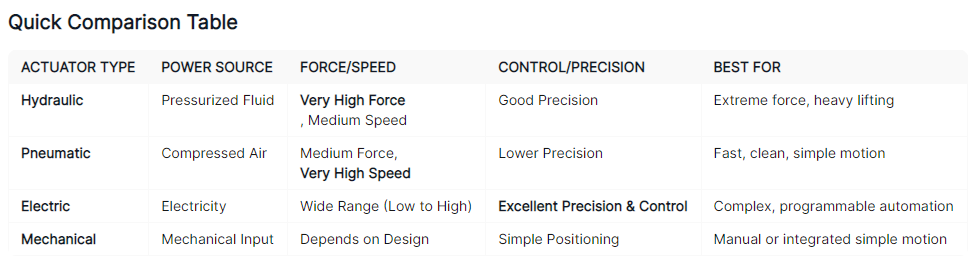
Although actuators can be classified in numerous ways (e.g., by power source, motion), the four most basic categories are determined by their power source:
1. Hydraulic Actuators
Their operation involves the use of pressurized fluid (typically oil) to generate motion. They are composed of a cylinder or fluid motor that transforms hydraulic power into mechanical force and motion.
Key Features: Durable, precise control, and extremely high force/torque.
However, they are less energy-efficient, require compressors and valves, and can be messy (leakage).
Frequently Employed:
1.Heavy construction equipment, including bulldozer blades and excavator limbs
2.Ailerons and rudders are examples of aircraft flight control surfaces.
3.Industrial presses (metal forging, stamping)
4.Brakes and elevators for automobiles
5.Manufacturing employs substantial robotic limbs.
2. Pneumatic Actuators
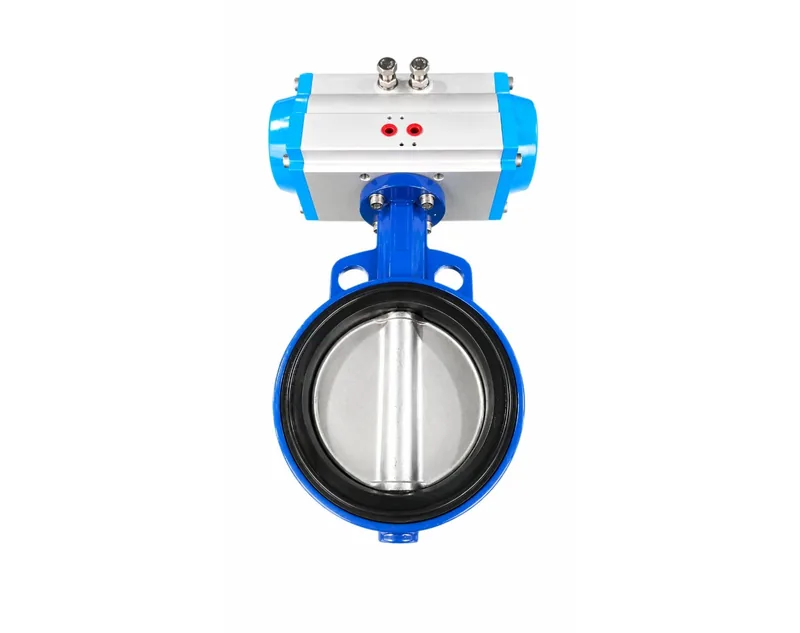
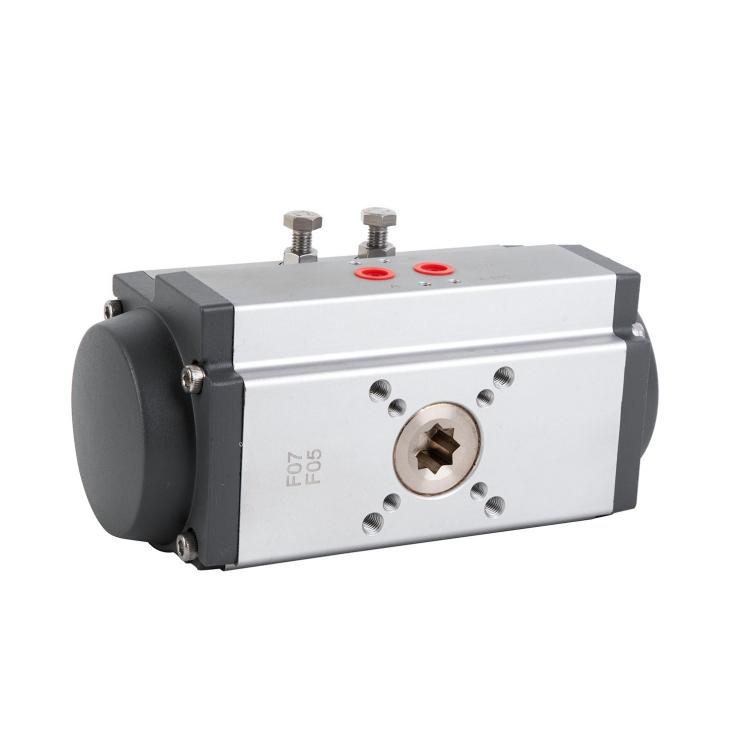
Mechanism of operation: Motion is produced through the use of compressed air or gas. When air pressure is applied, a piston within a cylinder moves. This is the most prevalent type.
Key Characteristics: Air compressibility results in a less precise operation, and the force is lower than hydraulic. Additionally, it is secure in explosive environments (no sparks).
Frequently Employed:
1.Factory automation (clamping, pushing, selecting, and placing)
2.Valve operation in process industries
3.Pneumatic instruments and dental drills
4.Equipment for packaging
5.Robotics, particularly grippers
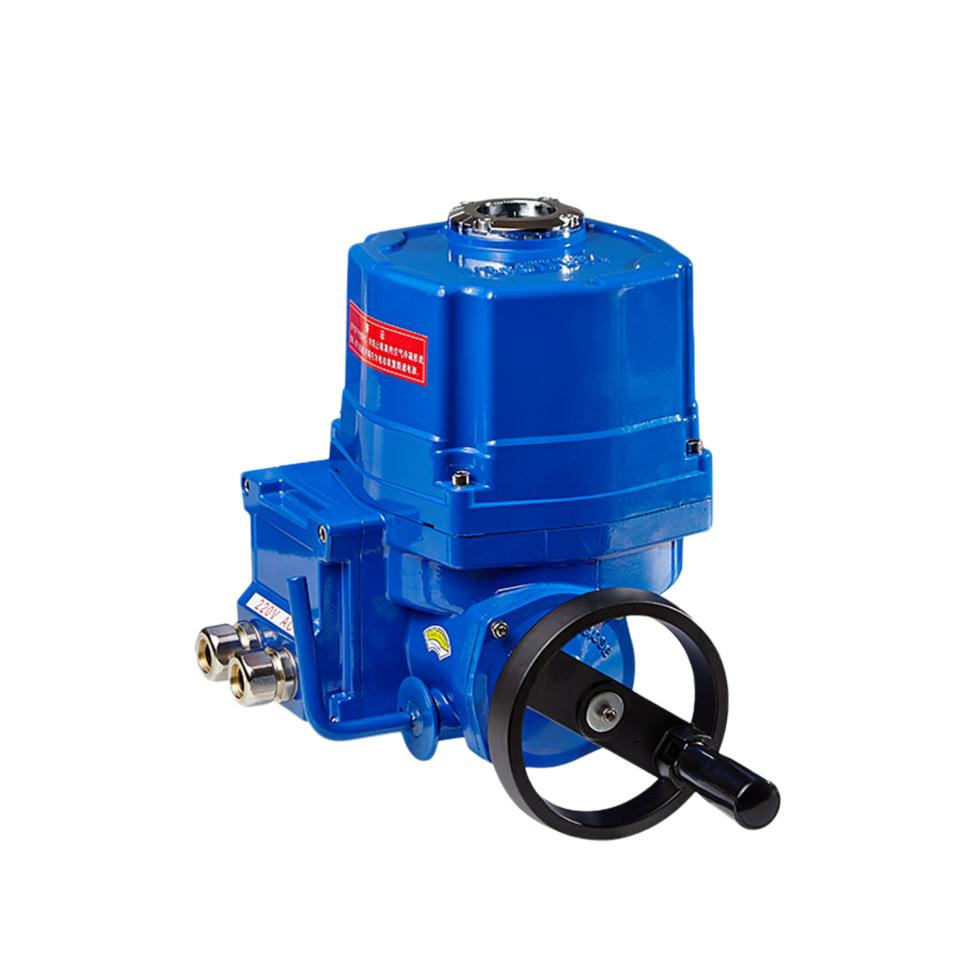
3. Electric actuators
They operate as follows: Utilize an electric motor (AC, DC, or stepper/servo) to generate linear or rotary motion. Gearboxes for torque multiplication and position sensors are frequently incorporated.
Primary Characteristics: High precision, excellent control, clean and silent operation, smooth integration with digital systems; however, they may be more costly and produce heat.
Frequently Employed:
1.Precision joint control in robotics
2.3D printers and CNC devices
3.Dampers and valves of the HVAC system
4.Power windows and seating are available on electric vehicles.
5.Disk drives and camera autofocus are examples of consumer electronics.
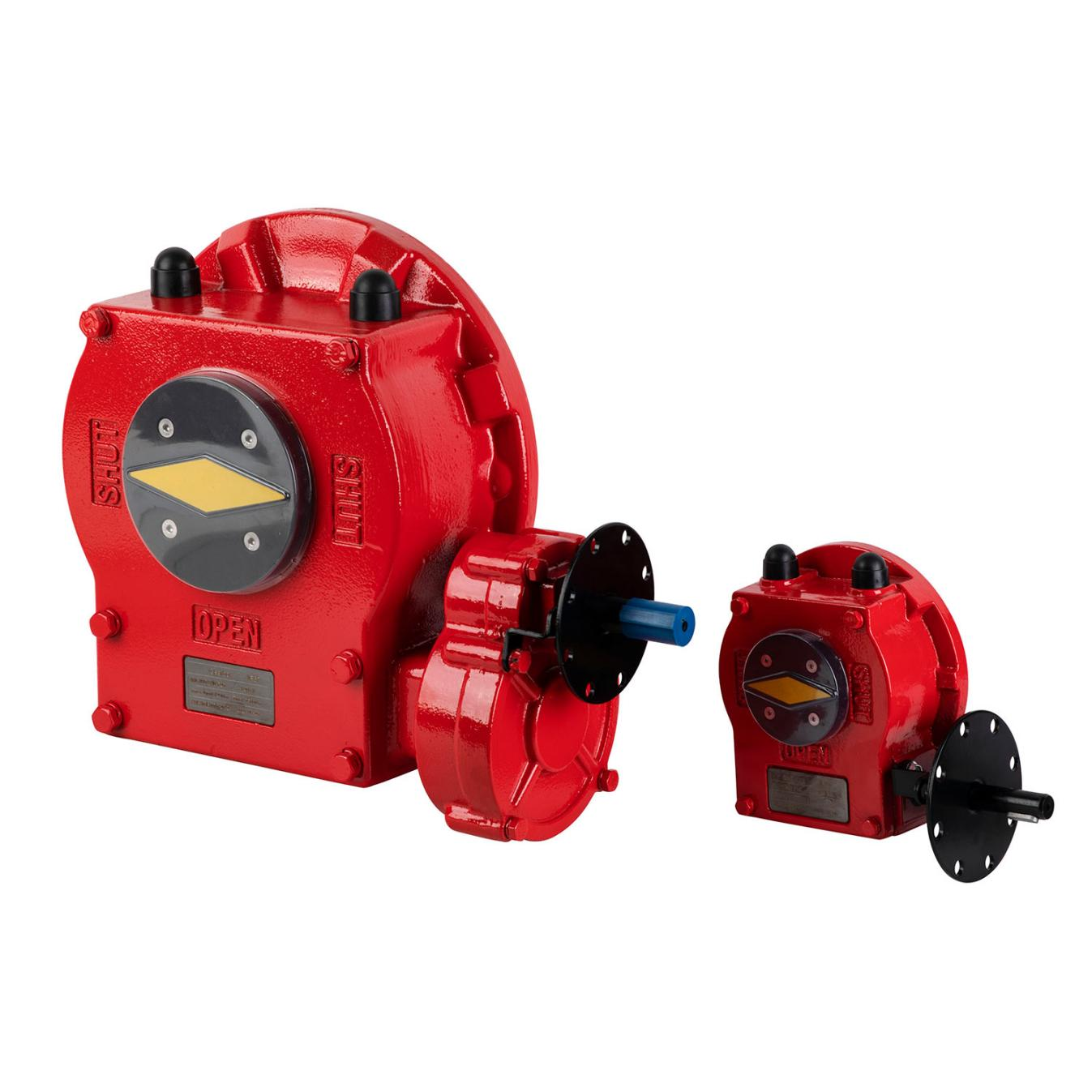
4. Mechanical Actuators
They operate as follows: Simple mechanical elements are employed to convert rotary motion (e.g., from a hand or motor) into linear motion. They are powered by an external mechanical source.
Key Characteristics: Self-contained, simple, and dependable; fundamental functionality necessitates no external power source; however, manual input or an integrated motor are frequently required.
Frequently Employed:
1.Manual vehicle jack (screw jack)
2.Vises and clamps that can be adjusted(e.g., bicycle brakes) Pulley and cable systems
3.Engines utilize cam and follower mechanisms.
4.Manual gearboxes utilize gear trains.