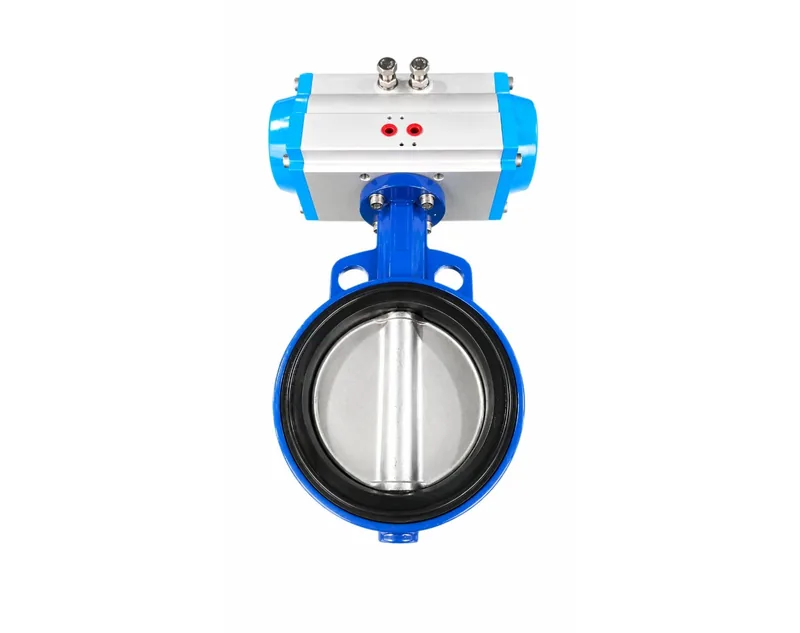
how to solve valve automation application by pneumatic actuator
Pneumatic actuators are the primary actuators in industrial fluid control, as they offer automated solutions for valve switching/regulation, remote control, safety, and explosion-proof operation. They are propelled by compressed air, controlled by signal linkage, and modularly integrated.
I. Fundamental Operating Principle (how to Operate)
It converts air pressure energy into rotary/linear motion by utilizing compressed air as power:
1.1 Air Source Treatment: The system is supplied with compressed air following filtration, pressure reduction, and lubrication, which are performed by a three-stage unit.
1.2 Control Signal: The solenoid valve is activated by an electrical signal transmitted by the PLC/DCS, which subsequently alters the air path.
1.3 Position Feedback: A closed loop is established by the transmission of the valve opening degree to the control system by limit switches/feedback devices.
II. Two Control Modes ( how to Control)
2.1. On/Off Type (Two-Position: Fully Open / Fully Closed)
Actuator + Two-Position 5-Way Solenoid Valve
Function: Rapid Full Open/Full Close (2-5 seconds)
Applications: Emergency shut-off (ESD), pipeline shut-off, and discharge valve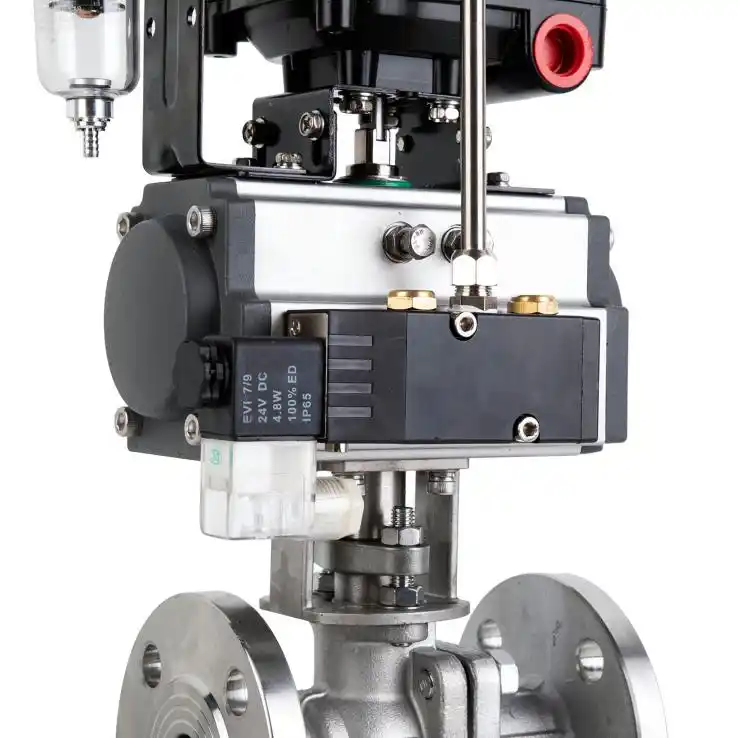
2.2. Regulating Type (Continuous Control: 0-100% Opening)
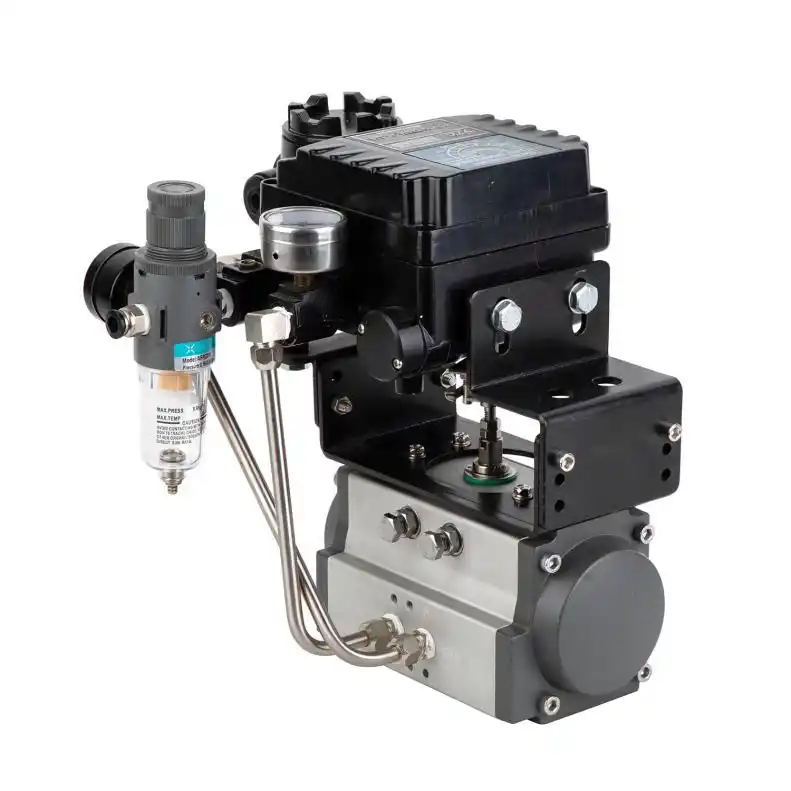
Components: Valve Positioner (Core) + Actuator
Principle: The valve opening is precisely positioned by the positioner, which proportionally modifies the air pressure in response to a 4-20mA signal.
Precision: Repeatability within the range of ±0.1% to ±1%
Applications: Closed-loop regulation of liquid level, pressure, and flow
III. Valve Automation's Five Fundamental Values (how to solve)
3.1. Centralized and Remote Control
No manual on-site switching is necessary; direct operation is possible from the control room/host computer.
Supports: sequential control, ESD emergency termination, interlocking, timed operation, and remote control.
3.2. Intrinsically Safe (Explosion-Proof)
Naturally suitable for explosion-proof zones 0/1/2 in chemical, oil and gas, and coal mines, as it does not generate electrical charges.
More cost-effective and safer than electric actuators.
3.3. High Frequency and Rapid Response
Speedy opening and closing (in seconds).
Supports high-frequency actions (hundreds of times per minute).
Appropriate for pulse control, frequent reversing, and emergency shut-off.
3.4. Key Advantage: Fail-Safe
Single-acting spring reset: gas/power/signal interruption → automatic return to safe position (fully open/fully closed).
Satisfies the safety level requirements of the SIL.
3.5. Maintenance and Cost
Low failure rate, straightforward design.
Maintenance necessitates only the replacement of seals and the cleansing of the air supply.
Simple retrofit: The addition of an actuator enables the automation of manual valves.
IIII. Pneumatic actuator vs. Electric actuator (how to select)
| Items | Pneumatic actuator | Electric actuator |
| Power | Compressed air (requires an air supply system) | Electrical Power (220V/380V/24V) |
| Explosion level | naturally explosion-proof, rendering it the optimal choice for flammable and explosive environments. | Necessitates a complex structure, high cost, and explosion-proof certification/flameproof design. |
| Response speed | Rapid (second-level), appropriate for high-frequency start-stop operations. | Slow (gradual/uniform speed), unsuitable for high frequencies. |
| Fail safe | Single acting type can Automatically return when gas cut off / power failed | Requires battery/energy storage; no natural reset. |
| Accuracy | Generally (can be lifted with a positioner) | High precision adjustment |
| Output torque | medium | Large, suitable for large diameter/high pressure valves |
| Environment | Dirt-resistant, dust-resistant, moisture-resistant | It necessitates a high level of protection due to its susceptibility to moisture and grime. |
| Cost | Low | High |
| Maintenance cost | Simple (replace seals, maintain gas source) | Complex (motors, gears, circuits) |
| Application | Explosion-proof, quick-cut, safety interlock, and with gas supply | No air source required, high precision, high torque |
In real valve automation projects, pneumatic actuator selection should be evaluated together with the whole control system rather than as a standalone component. Engineers usually compare torque output, air supply stability, solenoid valve matching, feedback devices, and safety requirements in the actual operating environment. For buyers who want to understand different product categories and matching solutions in one place, browsing the JIMAI product center can help clarify which actuator type, gearbox, or accessory is better suited for specific valve automation tasks.