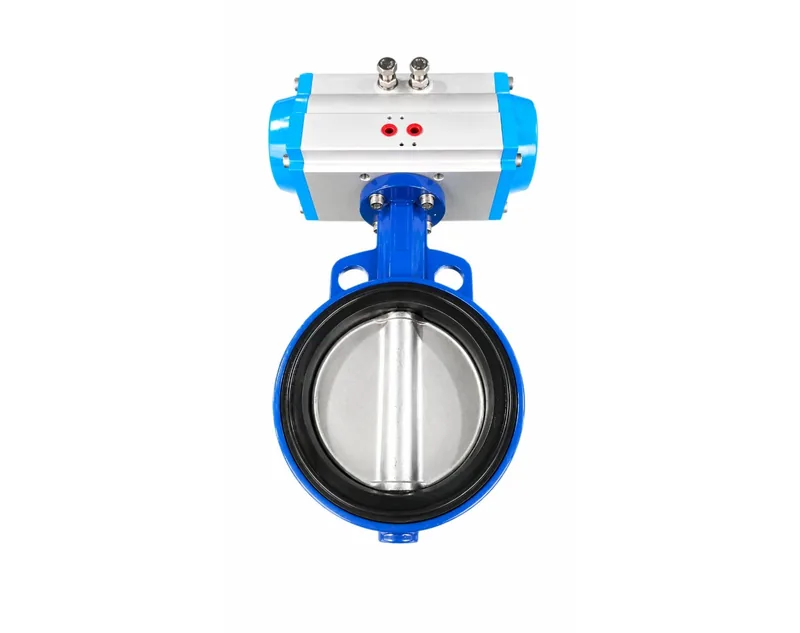
Article Overview: This comprehensive guide explains the pneumatic actuator, a critical component in industrial automation. You will learn how a pneumatic actuator works, its primary applications, and the key factors to consider when selecting one. Whether you are new to automation or evaluating a pneumatic actuator system for the first time, this article provides educational insight into the technology, its benefits, and practical selection steps.
What Is a Pneumatic Actuator?
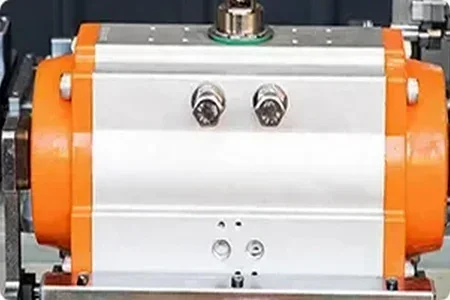
A pneumatic actuator is a device that converts compressed air energy into mechanical motion. It typically produces linear or rotary movement to control valves, dampers, or other mechanical equipment. Pneumatic actuators are widely used in industries such as chemical processing, petroleum, foodstuffs, and metallurgy because they are reliable, safe in hazardous environments, and offer precise control. The Pneumatic Actuator is often chosen for its simplicity and cost-effectiveness compared to electric or hydraulic alternatives.
Understanding the basic components—cylinder body, piston, spring (for fail-safe models), and valve coupling—helps buyers appreciate the technology. Common types include rack-and-pinion, scotch yoke, and linear actuators, each suited to different torque and stroke requirements. The core product term remains the pneumatic actuator, and all examples stay within this family. For example, a rack-and-pinion pneumatic actuator uses a linear piston to rotate a pinion gear, ideal for quarter-turn valves. A scotch yoke pneumatic actuator is better for high-torque applications like large ball valves. Linear pneumatic actuators directly extend a rod for gate or globe valves. Each variation serves a specific purpose, but all rely on the same principle of compressed air conversion.
How Does a Pneumatic Actuator Work?
The operation of a pneumatic actuator relies on pressurized air supplied by a compressor. Below, the process is broken into clear steps:
Step 1: Air Supply and Control
Compressed air is delivered through a solenoid valve or positioner. The control system sends a signal to direct air into one chamber of the actuator cylinder while venting the other. This pressure difference moves the piston or vane.
Step 2: Mechanical Motion Conversion
In a rack-and-pinion pneumatic actuator, the linear motion of the piston (rack) rotates the pinion gear, creating rotary output. In a scotch yoke design, the linear movement of the piston is converted to rotary motion via a slotted yoke mechanism. Linear actuators directly extend or retract a rod.
Step 3: Valve or Load Operation
The output shaft of the pneumatic actuator couples to a valve stem (e.g., ball, butterfly, or plug valve). The actuator opens or closes the valve based on the rotational or linear movement. Spring-return models ensure fail-safe positioning (e.g., closed on loss of air pressure).
This straightforward sequence makes pneumatic actuators easy to install and maintain. For more details on specific models, refer to the Pneumatic Actuator applications page.
What Are the Primary Applications of Pneumatic Actuators?
Pneumatic actuators are used across diverse industries where reliable, safe, and cost-effective actuation is needed. Below is a list of typical applications:
- Chemical Processing: Controlling flow of corrosive fluids and gasses in pipelines and reactors. The pneumatic actuator's explosion-proof nature makes it ideal for volatile environments.
- Oil and Gas (Petroleum): Actuating valves on wellheads, separators, and pipelines where explosion safety is critical. A pneumatic actuator for petroleum must often meet stringent safety certifications.
- Food and Beverage: Hygienic valve actuation for clean-in-place systems and packaging lines. Here, a pneumatic actuator solution is valued for its easy cleaning and absence of electrical sparks.
- Water Treatment: Operating butterfly valves and gates in filtration and distribution systems. The pneumatic actuator approach simplifies automation in remote or wet locations.
- Power Generation: Controlling dampers and valves in boiler and cooling systems. Fail-safe spring-return pneumatic actuators are commonly specified for emergency shutdowns.
Each application benefits from the pneumatic actuator's simplicity, high force-to-weight ratio, and ability to operate in harsh environments. The technology is especially valued where electric motors pose ignition risks or where a fail-safe spring return is required. For instance, in chemical plants, a double-acting pneumatic actuator provides continuous operation under normal conditions, while a spring-return pneumatic actuator ensures safety during power loss.
How to Select the Right Pneumatic Actuator
Choosing a pneumatic actuator involves matching its torque output, stroke type, and control features to the valve and process requirements. The following list outlines key selection criteria:
- Torque Output: Ensure the actuator’s rated torque exceeds the valve’s required break and seating torque by a safety factor (typically 1.25–1.5). For example, a large butterfly valve may require a pneumatic actuator with a torque output of 2000 Nm.
- Fail-Safe Mode: Decide between spring-return (fail-closed or fail-open) and double-acting (no fail-safe) based on process safety needs. A pneumatic actuator for critical isolation often uses spring-return.
- Supply Air Pressure: Verify the available air pressure range (commonly 4–8 bar) and the actuator’s consumption. Some pneumatic actuator systems include a booster to handle low pressure.
- Environmental Conditions: Consider temperature, humidity, and corrosive atmospheres that may require special coatings or materials. A pneumatic actuator for offshore platforms might need marine-grade protection.
- Control Signal: Select between on/off (solenoid) or modulating (positioner) control depending on whether precise intermediate positioning is needed. Modulating control adds complexity but enables fine process adjustments.
By systematically evaluating these factors, buyers can avoid oversizing or undersizing their pneumatic actuator solution. It is also wise to consult with valve manufacturers to confirm torque values and actuator compatibility. The goal is to select a pneumatic actuator that balances performance, durability, and cost.
FAQ
What should buyers evaluate first about pneumatic actuator?
Start with fit, evidence-backed requirements, and supplier proof relevant to pneumatic actuator before shortlisting vendors.
How can teams reduce procurement risk for pneumatic actuator?
Use structured comparison, validate specifications early, and review implementation or quality checkpoints with documented evidence.
Related articles
- Reasons for the Safety of Pneumatic Actuators in Comparison to Electric Actuators
- Reasons for the Safety of Pneumatic Actuators in Comparison to Electric Actuators
- Pneumatic Actuator Fundamentals for Technical Buyers
Conclusion
The pneumatic actuator remains a cornerstone of industrial automation due to its reliability, safety, and cost-effectiveness. This guide has covered what a pneumatic actuator is, how it works, its widespread applications, and the critical steps for selection. By understanding these fundamentals, buyers can confidently evaluate a pneumatic actuator approach for their specific process requirements. Whether you are retrofitting existing valves or designing a new plant, the pneumatic actuator offers a proven solution for efficient and safe operation.