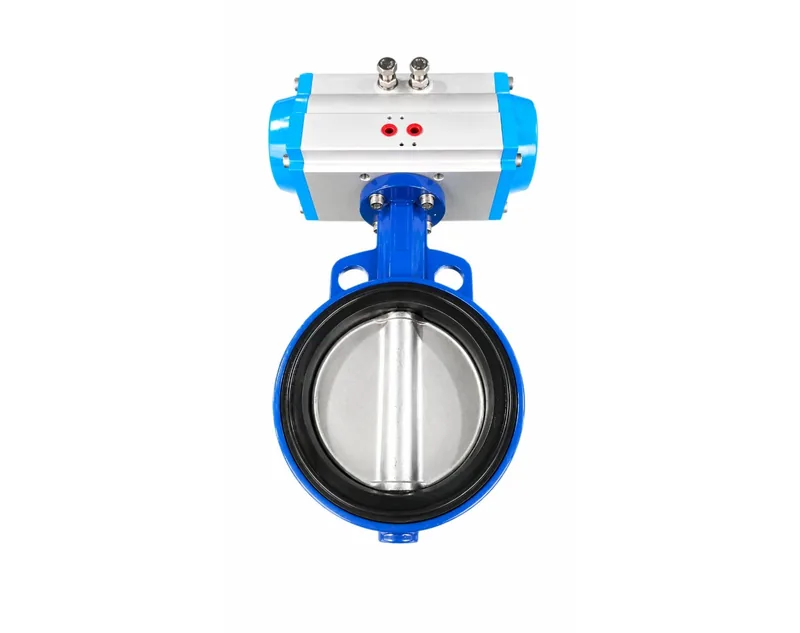
Do pneumatic actuators require a fluid to operate?
Before discussing whether a pneumatic actuator requires fluid to operate, it is essential to first grasp the fundamental working principle of a pneumatic actuator:
Pneumatic actuator functions by utilizing compressed air to generate mechanical motion, typically through the displacement of a piston or diaphragm within a cylinder. This process converts air pressure into linear or rotational movement, enabling the operation of valves, grippers, or other machinery, often complemented by springs that provide a return force or serve as a fail-safe mechanism. Air enters a chamber, generates pressure, displaces the internal component (piston or diaphragm), which subsequently actuates an attached rod or shaft, and the air is expelled, enabling the component to return or reverse its motion.
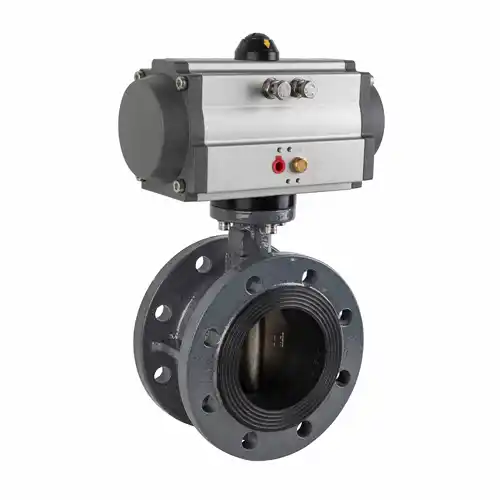
So that pneumatic actuators definitively depend on a fluid for their operation. The fundamental comprehension of this concept resides in the scientific definition of a "fluid." In physics, a fluid is a substance that persistently deforms when subjected to an applied shear stress, including both liquids and gases. Although the term "fluid" is often linked to liquids such as water or oil, compressed air is unquestionably a gaseous fluid.
Pneumatic systems specifically employ compressed air as their operating medium. This air serves as the fundamental medium through which power is transmitted. The procedure commences with an air compressor that intakes atmospheric air and compresses it. This high-pressure gaseous fluid is subsequently conveyed through a system of pipelines and valves to the actuator. Upon instruction, the regulated discharge of this compressed air into the actuator's chamber generates a pressure differential. This force applies to a piston, diaphragm, or vane, inducing movement in either a linear or rotational manner. This mechanical motion is subsequently utilized to execute work, including pressing, pulling, lifting, or clamping, across diverse industrial applications.
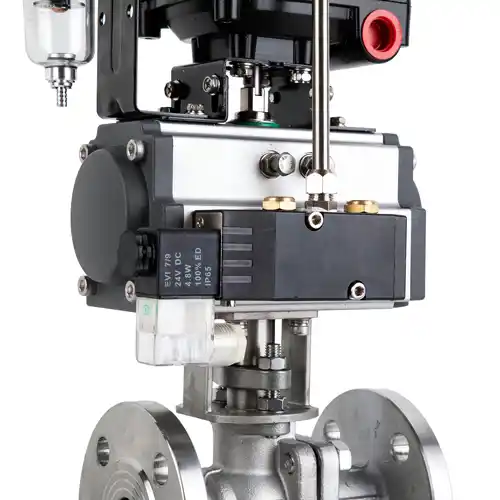
The selection of a gaseous fluid such as air provides several notable benefits, including high velocity, purity due to the absence of oil leaks that could contaminate a process, and intrinsic safety in explosive environments. It is precisely this utilization of a compressible gaseous fluid that distinguishes pneumatics from hydraulics, which employs relatively incompressible liquid fluids such as oil. Therefore, the functioning of a pneumatic actuator inherently relies on a fluid—specifically, the regulated energy and force of compressed air.